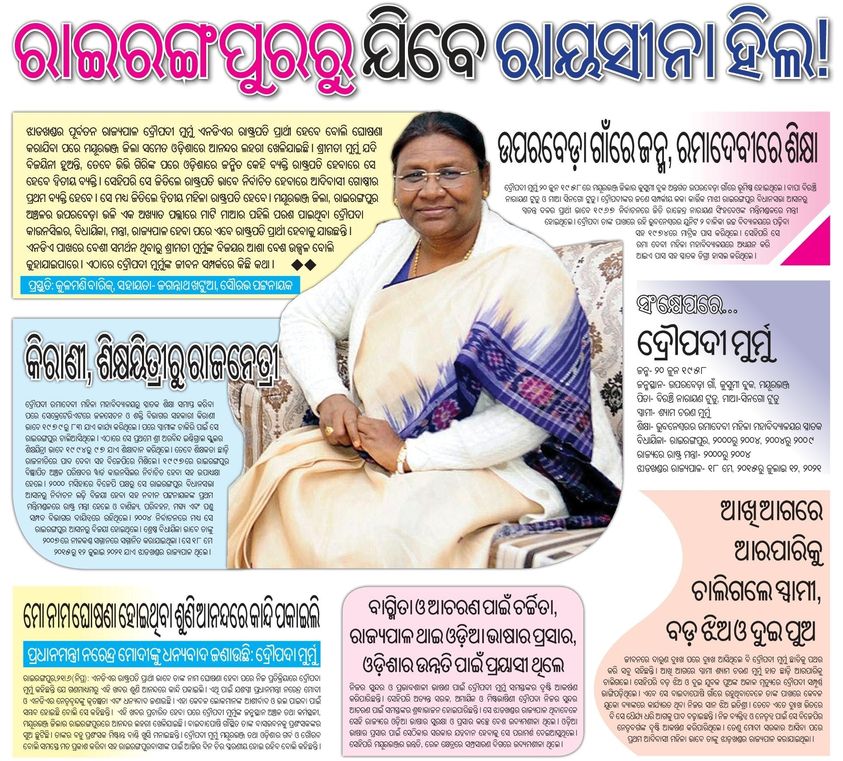
Congratulations to Respected Smt. Draupadi Murmu A Dedicated sincere Tribal Women from Mahuldia, Rairangpur Mayurbhanj, Odisha on being announced as the Presidential nominee of #NDA. 2022 Let’s Wish her. She may become first Women President of India from the state of Odisha
Once elected, she will be the first tribal President of India & the second ever female President of India
Started as a teacher in Tribal school of Odisha to become president of India.
A journey which can happen only when hardworking people with humble backgrounds are backed by government.
She will be the first person from a tribal community to hold the highest office in our country.
Draupadi Murmu Born in a Santal family in our district.
Amongst the loud noise of social justice , here is our new president nominee #DraupadiMurmu from a tribal community
Her vast experience and extensive knowledge would enrich the office of President.
Big thanks to our Respected PM Shri #narendramodi Ji for taking a momentous . PM #narendramodi ‘s tenures have been golden period for their empowerment.I congratulate her & thank Hon’ble PM & party senior leaders.
In yet another remarkable step towards women empowerment and social justice.
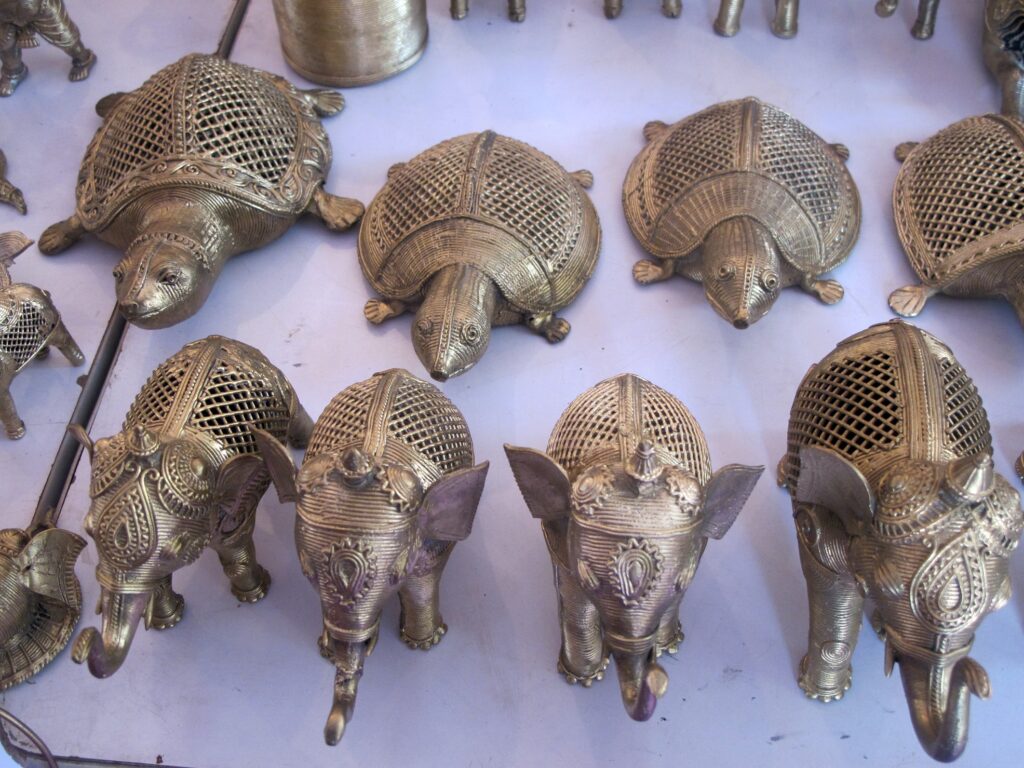
Though not native to Mayurbhanj, Dhokra craft has become integral part of this culture now. Go to any mela or just roam around on the streets of Baripada, you will often see road side dwellers and shops waiting for customers and enthusiasts with their beautiful metal sculptures. These beautiful looking sculptures are often in the shape of animals, decors, household items or more commonly known god and goddesses.
Dhokra sculptures
History
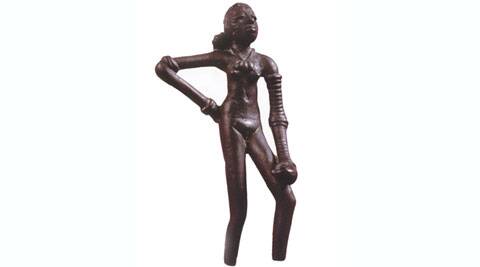
Lost wax process was practiced in India since the Bronze Age (3000-1800BC). The beautiful dancing girl found in Mahenjodaro is evidence of that metal craft is an integral part of Indian culture.
Dancing girl sculpture found at Mahenjodaro
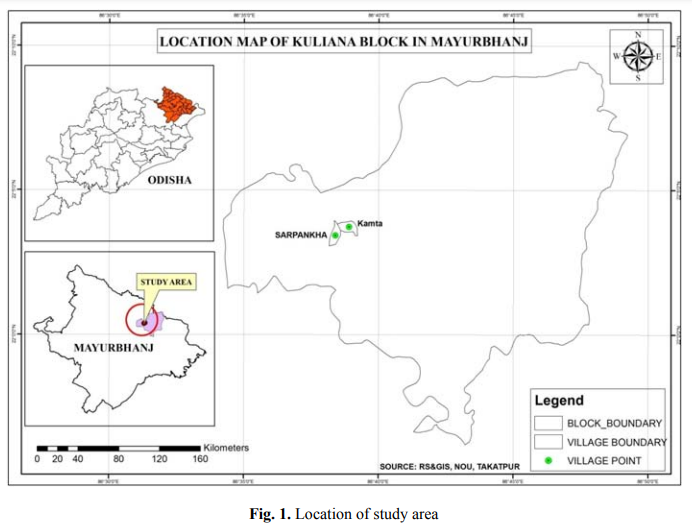
However as per recorded history of Mayurbhanj, during the time of feudal state, impressed with the crafting skills, the king Purna Chandra Bhanja Deo had invited the Thatari,who were known for their skills of Dhokra. The family moved to the village Kuruma near Karanjia subdivision of Mayurbhanj district which is 120 km away from their village (Fig. 1).
Those days this family used to build utensils for the royal family. According to the district gazette “thatari caste are a class of brazier and brass workers. Their number is rather few in the district.”- (N. Senapati 1967: 115).
Mayurbhanj was also home to several cultural rich communities as well. Among those Rana (the bania) family were in close association with these metal craftsman families to manufacture attractive range of decorative objects using a variety of metal like kanga (brass), Pittal, aluminum etc which they (Rana) used to sell in different parts of country and abroad.
Earlier these families also used to prepare “eight metal amalgam” famously known as astadhatu deities and jewelry for the king. The astadhatu (Eight Metal) consisted of Gold (suna),Silver (rupa), Copper (tomba), Iron (luha), Zinc (dosta), Tin (tino), Lead (sisa) and Mercury (paroda).
Tools & Procedure
This article is written on a research paper which focuses on anthropological study of traditional knowledge on metal craft Artisan of Sarpankha, village of Mayurbhanj district Odisha.
Here I tried to describe the process of manufacturing and technique related to it. Currently in Mayurbhanj the dhokra craftsman are living in the villages like Kuliana, Kamta, Sarpenkha, Paniakuili, Pachesahi, Kuliakhunta, Chitrada, Lehakemi etc.
Materials needed
Dhokra casting artisans use various equipment that can be found easily in nature. Tools are often self made and doesn’t need heavy machines. Few items are often purchased from local market.
The basic materials like Resin, salt, clay, sand, paddy chaff and wood can all be found in the village easily.
Other materials required for the preparation of the dhokra crafts are:
Working board-maham pidha (working wood board),
Modeling stick (kelub kathi),
Beeswax-(Maham) is purchased from the village, where it was collected by the tribal people.
Resin (jhuna),
Grinding slab (the clay paste is groung with this stone) and hand stone (silo putta) iron blade, (Arisi patia) the wax press (Janta),
clay (mati),
lado ( fired clay) the fired shards of the clay forms are finely ground and mixed with the fresh clay to make it stronger against high temperature.
cow dung (gobor),
sickle (daa),
hammer (Hatudi),
Chisel (Chhini),
weight machine (dandi),
brass (pittal) when the brass objects like bowls, water vessels, measuring bowls worn out such items are sold to scrap metal dealer at half rate.
Salt(luno),
long picher (Bada Sanduasi),
hand blower earlier the villager were using goat skin as a blower, (funka), fire pit cover with broken earthen pot,(kalasi vanga).
Mold preparation
The dhokra technique started with the preparation of mould (chhancha) of different vessel animal, household object, and figures, all prepared with clay. The clay core defines the hollow space of the brass object. It shows the desired objects in a smaller and simplifier forms. There are two types of core used by the caster, the opened core and the closeded core. In open core casting there is one or more opening forms used to scrape out the clay core after firing the core paste. Gobar mati (cow dung mixed with soil) is used. The soil from the paddy farm which contains isless is collected after the harvesting of crops. Initially the artisans pounder the soil, sieved and soaked in water and mixed with cow dung. They use 3:2 soil and cow dung as per the necessity of proportion. The soil is kneaded untill it reaches the leather hand condition and is then ready for mould building. After the preparation of the mould as per their own requirement, the clay core is dried under the sun. When the clay core is dry the surface is smoothed out with the thumb and rubbed with the green leaves. The leaves juice helps to create a better adhesion of the wax. For the closed core paste (Chitamati) sticky clay with sand is used for preparation. 6:4:1 (Clay:Sand:Jute). These potato jute bags are used as jute after cut in the small pieces. Clay doesn’t need to be removed after casting. When left in the hollow from a solid casting can be feigned and thereby and higher price claimed for the greater weight.
Wax preparation
The wax is purchase from the market at the rate of 300/ kg. The wax from wild bees is rarely available. To make it more pliable resin (Jhuna) is mixed with wax 1:10 proportion (resin:wax). A clay pot is set on fire. Resin is melted on that clay pot then the wax is added. The mixture is brought to a boil for ten minutes while being constantly stirred with a bamboo stick. Then the wax is filtered through a cloth. The boiled waxes are filtered over a vessel filled with water. The liquid wax which is lighter then water congeals on the surface of the water.
Production of wires
Two wooden press stick (Jhanta badi) of one meter long are needed for the production of wires. One is the (Andiapata) male plank another is female plank (Maipata). The (Janta phungi) socket consists of a self cast brass or an aluminum cylinder which has heirloom with symbols engraved around the rim. Various round sieves are prepared with Indian aluminum. Coins (Chaki) can be inserted into the cylinders bases with holes using various sizes nails. The wax is needed and pressed until it reaches the desire ductility. The wooden plunger (Sulat) is fitted with the brass or aluminum cylinder (phungi). The brass or aluminum cylinder (phungi) with wooden plunger is kept on female plank (Maipata). The wooden plunger is pressed with male plank (Andia pata) on to the wax. Pressure occurs through the use of the whole body with the abdomen pushing to male plank towards. The things in this manner wax threads formed through the sieve coin.
Coiling of wax thread
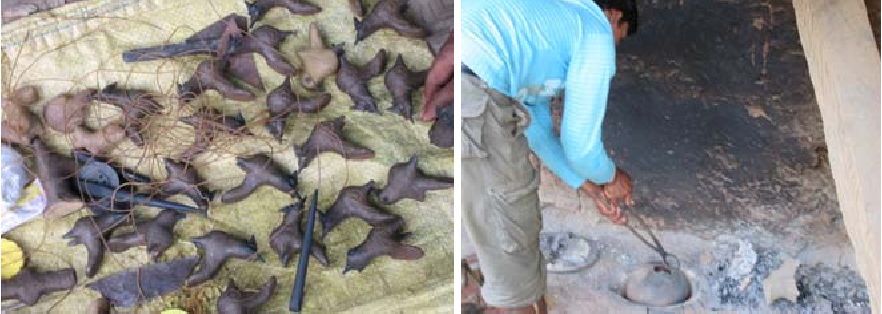
The craft man covers the surface of the mould with wax thread with a diameter of 0.5 to 1.5mm coil. The thread is laid tightly without flattening it. Different portion of the model like head, arm, leg, neck are separately decorated by wax. If the spiral coils do not join up, then the modeling stick (kalup kolhi) is used. A saddle (Pidha) of 42 X 17 X 8 serves as marking block for handing wax. The semi-rounded hand block (situni) is used for rolling wax into thread or pounding it into sheets on the working block. The spur is either pressed or welded on to the area where it optimally benefits (Fig. 2).
The first clay coat
After the completion of covering the wax threads, a clay coat mixed with cow dung (palkhania gabarmati) is applied. The clay coat consists of the same materials as for the core paste in the open-core technique, with the mention that the water quantity is higher in this case. The first clay consists of 3:2 (soils: cow dung) and it’s used to produce all the details of the wax surface. The larger is applied to a thickness of 0.4 C.M. However, on the spur a coat of 0.8 C.M. is applied. No inclusions should be allowed to develop; otherwise during casting process metal could be filling it. For smaller item one channel is provided and for the big items more than one channel is provided. Then the embedded form in kept under the blazing sun to dry.
Fixing the closed core
The tin triangles are prepared in a zigzag manner with a hammer and chisel, a piece of iron is place on bottom to chop in properly. These tin triangles are gently trapped all around through the clay and waxes. The core needs to be fixing, otherwise it would move freely in the hollow space created when the wax has melted away. The triangles fly in all direction at intervals of about 4 cm.
The second clay coat
The soil clay is mixed with sand. Initially soil is pounded, sieved and soaked in water. The soil, sand and jute (proportion is 6:4:1), then the jute is mixed and needed in to a lump of clay with water. The coat is applied about 0.8cm thickness. When working with the clay a bowl of water is always kept nearby because sometimes the first clay coat needs to be moistened with water so that the binds batter with the second one. The lumps of clay are completely covered. According to the caster family the size of the wax model is permits, up to four of them can be combined into casting form. The clay is then laid out to dry overnight.
The form receivers a funnel
The Chunga or channel is developed from a lump of clay (balimati). It is a fix path way for transformation of molten brass from the funnel like container of molten brass to the wax. The channel is placed over the wax plug in such a manner that the plug remains visible below. The joint reins forced on the outside with a thick layer of clay and make it dry under sun.
The metal and its cover
Brass metals (dhatu) are purchased from the market. Warn out brass objects like bowl, bells, measure pot, are obtained from the market at half rate of the new one RS- 500/- all are broken up in to scrap and prepare for the casting feed. The clay form channel is overfilled according to the size of the wax items. A large pinch of salt is added to the metal for flux. The cap is laid over the metal and the cap and channel are joined by using clay mixture. The clay mixture paste prepare with clay, sand and jute in 2:2:1 proportions. A thick roll of clay spread to the middle of the channel and make it dry.
Melting the metal by firing
The wood is purchased and placed on fire pit (salo – Fig. 3). Two larger or three smaller forms are placed carefully the metal facing down, when the fire is kindled. The wood pieces catch fire. The flames turn yellow when the wax melts and burn away. The lost wax these leaves a hallow form behind into which the metal can later flow. The hard blower machine is used for increasing heat. Upper portion of clay shared placed on the top of the over to prevent the heat from escaping too quickly. It takes over to one and half hour to complete the burning when a light smoke rises and the flames turns green. It is ready to be cast using long pincher the glowing form is clasped at its upper and pulled from the fire pit and laid down on to the clay ground. Then the crucible end with the pitcher lilted up for the casting. The glowing form is cautiously and calmly laid down on to the clay ground. It is astonishing how the melting metal easily flows through quite a number of corners through the pressure of the casting head. The forms are placed upside down against a wall. After cool down b the casting coat is carefully broken and some extra rough bits retained during casting. It is bough carefully and rubberier with sand to get smooth glace.
Wax goods under semi construction and dhokra metals melted in fire pit
Conclusion
During federal state the Dhokra objects were prepared for local folks, selling in local market. It has some religions importance in this area so they prepare, Laxmi, Ganesh, Elephant, Laxminarayan which are honored and worship in Odisha in the month of margashira (mid NOV to mid DECEMBER) and purchased by the local people. Caster faces nearly 15 to 20% damage during casting. The dhokra art is a time consuming and linked with weather condition. During bad weather casting cannot be done. Price changes in the dhokra material because of the increasing rate of the materials and available of traditional market. Hard labor with group work and less financial gain make the Craftsmen to seek new job or force them to do other jobs. The dhokra casting is an indigenous craft facing many problems then also producing their craft material for the survival of their traditional act. In spite of institutional intervention; artisan continues to operate with traditional technology, tools, designs and informal training. Wages do not match favorable with the skill and experience of the artisans.
This study was first published in ICJ in 2015 originally written and compiled by Champak Kumar Sahu – Dept of Anthropology and Tribal studies.North Orissa University, Sriramchandra vihar, Baripada, India
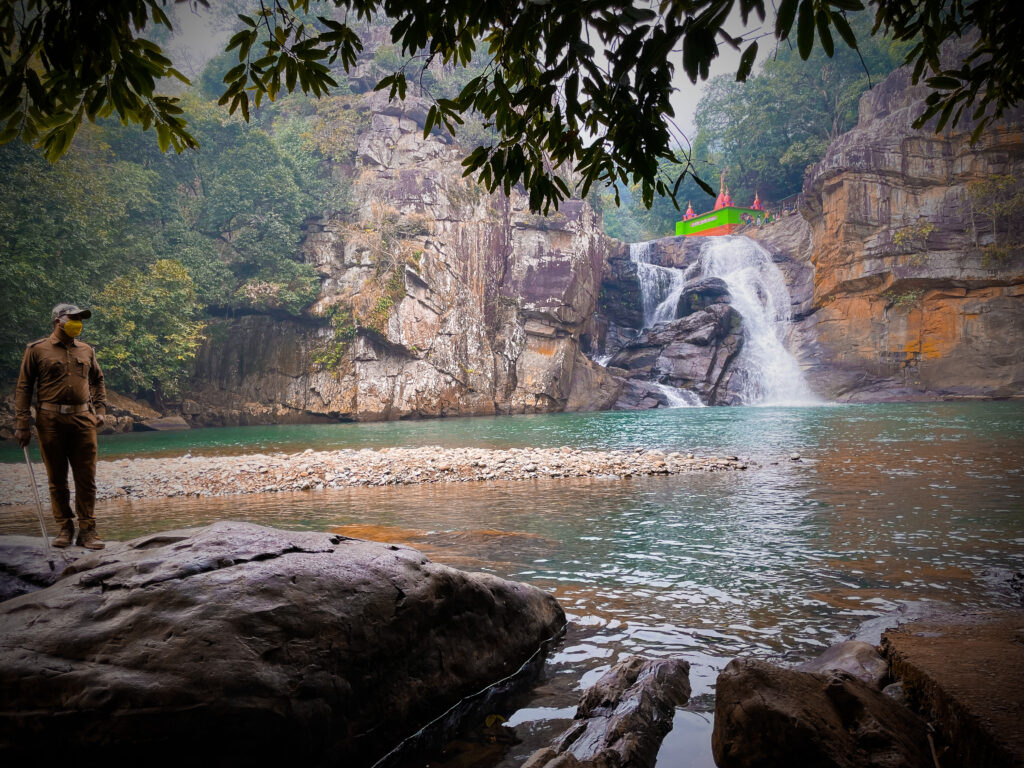
Debakunda or Devkund waterfall is well known place in Mayurbhanj for its beautiful and serene landscapes, waterfall and divine Maa Tarini temple. Situated at nearly 60 kms away from Baripada, this place is one of best known picnic place too.
This place is reserved under forest protection act because of which you wont find permanent road inside.
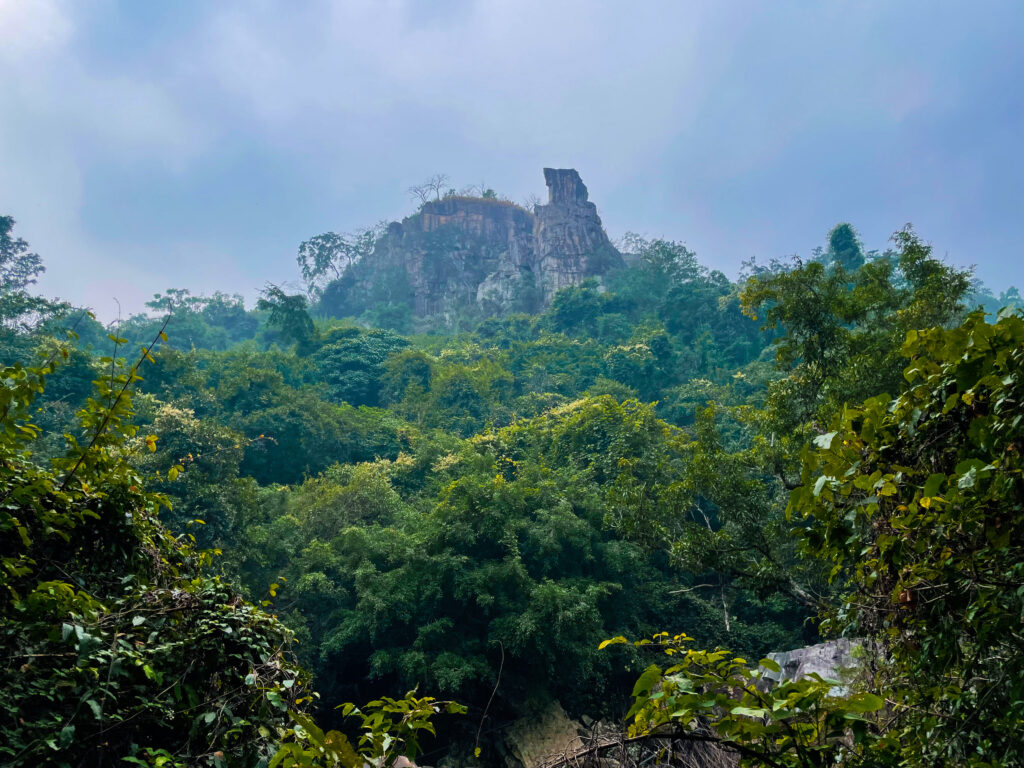
A scenic view on the way to temple
History
Though debatable, the story is often told by localities, that this area used to come under Matsya Raja during old Mahabharata period and Pandavas used to come to this place. The nearby Shami tree, was the place where they had hidden their weapons during their “agyatawasa” of 1 year.
More recent story is during 1940s is when Mayurbhanj King built the temple when it was found by a researcher named Rajkumar Profulla Chandra Bhaja Deo.
Road
To reach devkund, one need to travel towards Udala main town. It is hardly 20 kms away from there. The entrance of Devkunda is 5 kms away from the main temple. The picnic spot and toilet is at the left of the entrance. Bigger vehicles like buses or trucks are not allowed inside from this gate, however cars and Suvs can pass through.
You will also see few shops selling chai and pakoda there. I would advice to quench your hunger and thirst here as you wont find anything to eat inside.
The second gate is 3 kms way where you will often find police or forest rangers guarding, they wont allow to pass any vehicle from there. You need to park your vehicle and start to walk from here.
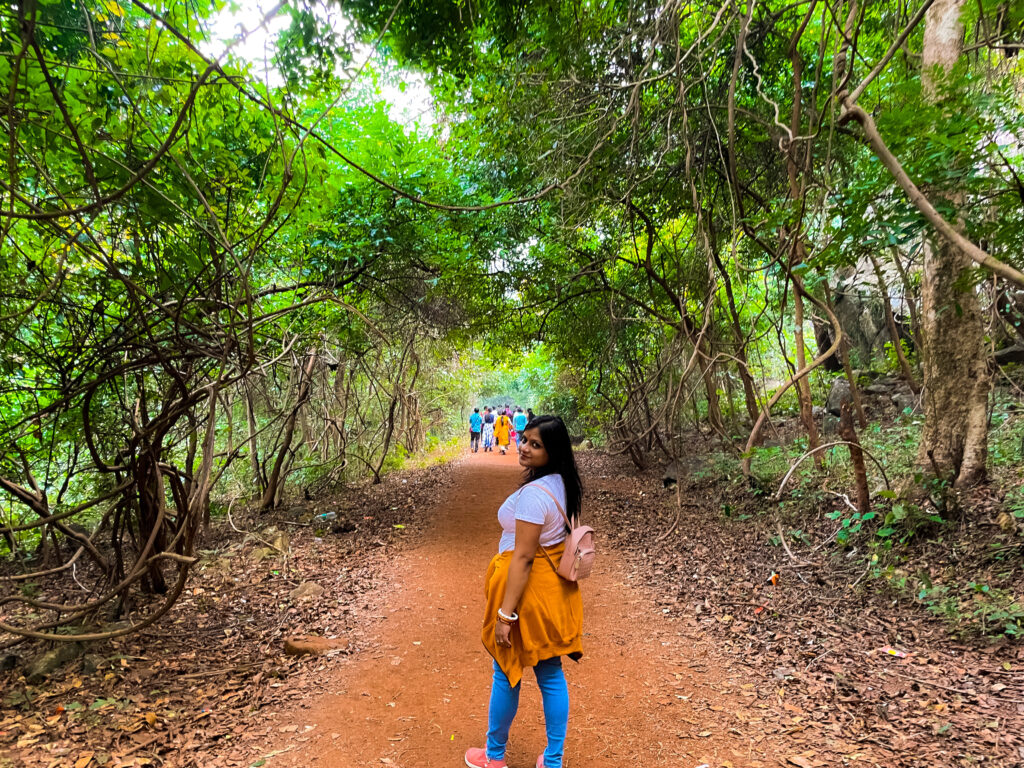
Walking towards the temple
The beauty of the path is just stunning. The lush greenery of the terrain is rejuvenating for the soul. You can hear occasional chirruping of birds and screaming of monkeys. The ferns were green and the water was blue.
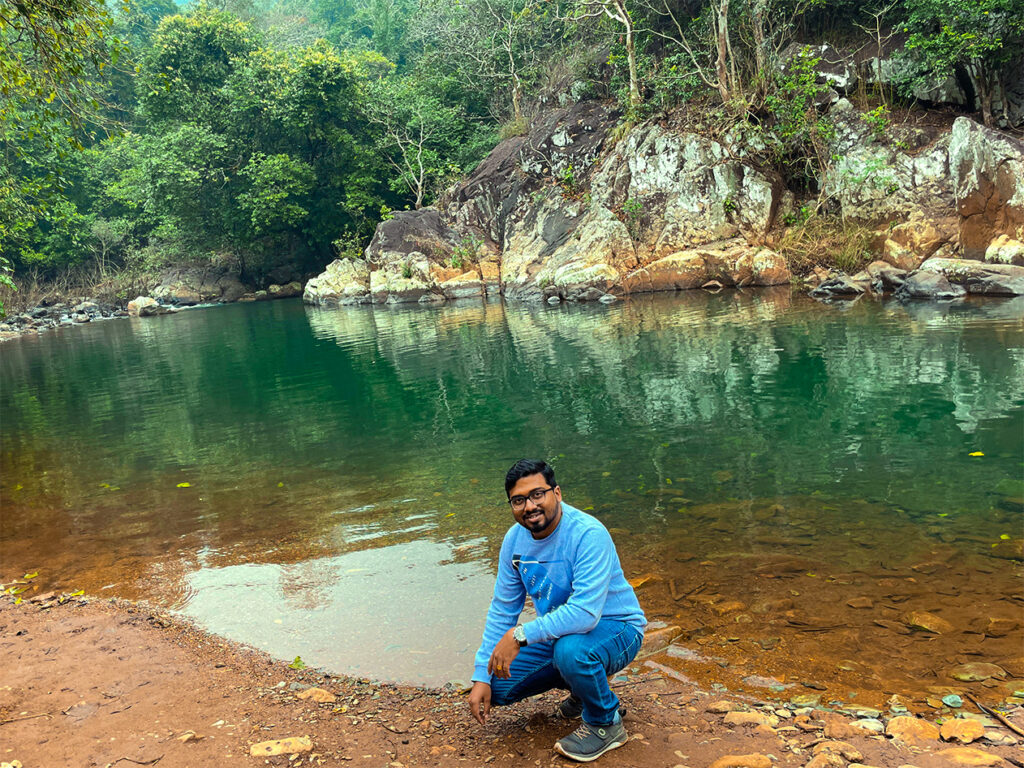
Blue waters on the way to devkunda temple
During this walk, you will often find places to take rest and photographs. After walking for 2 kms we finally managed to reach the base of temple. Lot of people were simply sitting here and taking a breath. The view of temple from this place was mesmerizing.
View of kunda and temple from below
This kund or pond is actually called devkunda which is formed by the waterfall which is almost 100 feet high. There were few accidents in past because of which people are not allowed to go near the kunda.
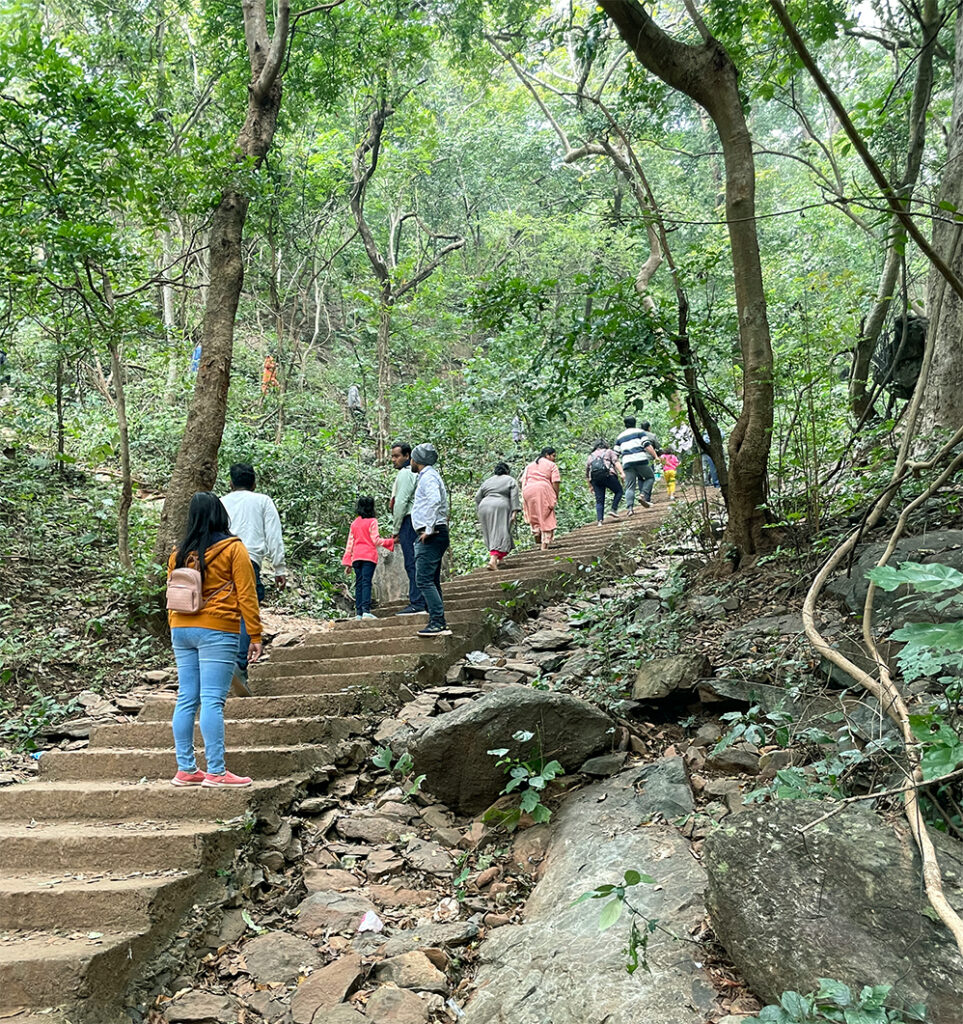
Once we spent 15 – 20 mins here, we decided to go to the temple which is at the top and to reach there we had to take stairs which looked pretty tiring.
My wife staring the stairway
After a walk of almost 200 steps finally we managed to reach at the Ambika temple. Though photography inside the temple is not allowed, but the view of temple premise itself is very stunning.
Scenic beauty of this place is mesmerizing. Occasional chirruping of birds and cries of monkeys will definitely pull your attention. We did hear trumpet of elephants as well. Forest guards on the gate did warn us about the them earlier.
More to explore
The construction of stairway is for the regular traveller and pilgrims who want to visit the temple. Most of the people just go there and come back. Apart of the temple, there are more jewels to explore like Devikund, Tela kund, Haldi Kund and a banana forest. However there is absolutely no friendly roads to these places but if you like adventures and experienced with jungle and mountain tracking, you can try to explore these places too. However during on season ( i.e. Dec – Jan ), forest rangers and police wont let you do so. So if you wish for the adventure, it is advised to go there during off-season.
Please let us know when you visit there. All the best for your journey.
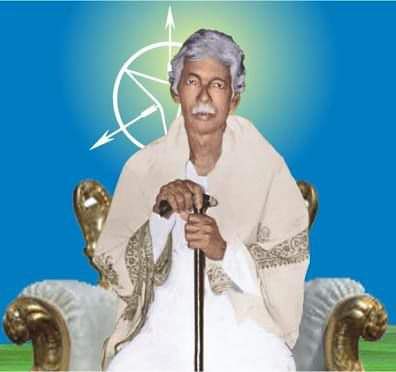
It is the deeds of a common man that transform him into an extraordinary one. This statement has its best reflection in the personality of “Guru Gomke Pandit Raghunath Murmu”. His noble works and fights for his own language have brought him many identities. Hailed as Guru Gomke, people do regard him as a godly figure. Even today, on the day of Guru Purnima, the Kapiburu locality near Rairangpur in Mayurbhanj district of Odisha gets crowded by people to pay homage to this iconic personality, Pandit Murmu. He is the one who has created the Ol Chiki script of the Santhali language.
santhali culture
he Ol Chiki script of the Santhali language is enriched with the cultural identity of the tribal community. He used to say, “our literature can’t progress without its own script”. The norms and standards set by him have become the traditional rituals for the santal community for which he is awarded with the position of God by the community. The script prescribed by him is still being followed by the Santhal population of Bangladesh, Nepal and India.
On 5th of may in 1905, full moon day of Baisakh, the village of Dohardihi, Dandbus welcomed the third son of village manjhi Shri Nandalal Murmu and his wife Smt. Salomi Tudu. As per the local tradition the new born was bestowed with the name “Chunu” after his grandfather and later it was changed to Raghunath. In the year 1912, the seven-year-old Raghunath started his schooling in Gambharia Primary School situated at a distance of 3 kms form his village. The mediums of teaching at that time were Oriya and English. This fact soon became a matter of concern for him as most of the students in the school were Santali and they were not able to understand the languages through which they were being taught. A different oral language was in use by the Santhalis at that time for the communication purpose. Later an independent script was designed by Pandit Murmu based on same oral language.
In 1914 Raghunath Murmu was admitted to Bahalada Primary school, which was about 7 kms away from his village. As the distance was not in his favour, he along with his friends made a hut near the school on his relative’s land at Baladunguri and started living there. As a child he used to play with sand by drawing figures from which he got the idea of having an independent script. He was sent to Baripada, the capital city of “Mayurbhanj State” for further studies. But deep inside his mind he was stocked with the thoughts of having an independent script. During his holiday visits to the home place at Dandibus he used to spend quality time alone at Kapiburu Jungle, where it is believed, he invented the Ol Chiki script in 1925. The locals had a strong belief that Pandit Murmu used to get vanished inside the Kapiburu forest.
Interested to know more ? Please click on below link to know more about him :
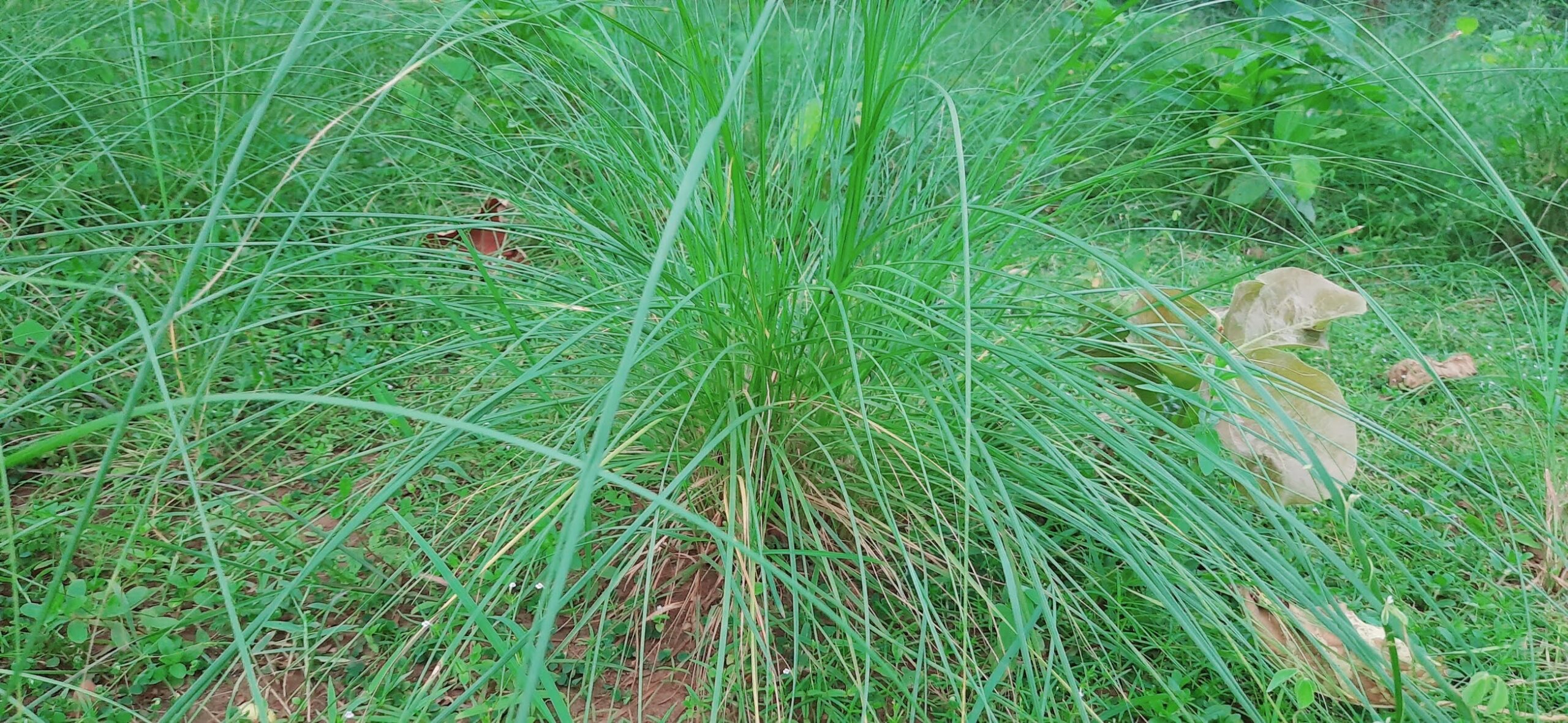
“Sabai grass” when I first time heard the name, I thought it’s something new but soon I realized that is the same “Bobai ghaso” which people in my village used to makes ropes from. In my childhood during my vacations, when I used play on the streets in the village, I have witnessed it many times without realizing its potential and importance.
Mostly, I have witnessed these grasses were being used to build ropes often used for the charpai (cot), machi (small stools) and some small toys as well. But it was mostly “ropes” which were in high demand in local markets. I remember, people talked about paper mills who used to purchase these ropes in very large quantity. Probably they used these to tie bamboos at the time of harvest from forests. With some research, I found that these grasses are pulpable too – so along with bamboo these were also fed to machines to make paper thereby recovering the cost too.
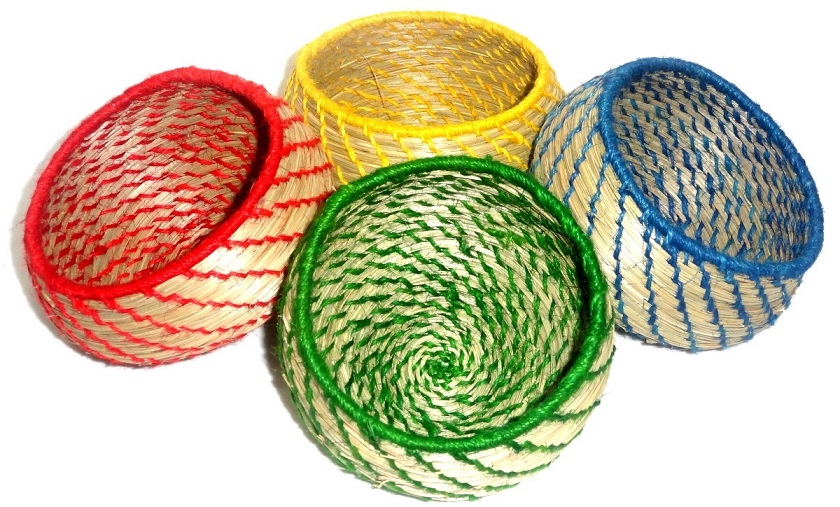
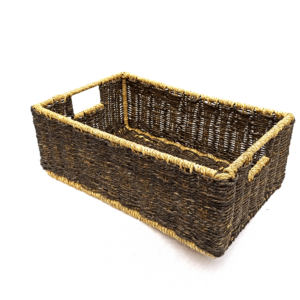
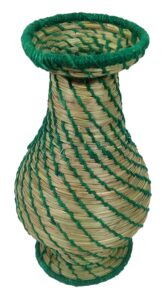
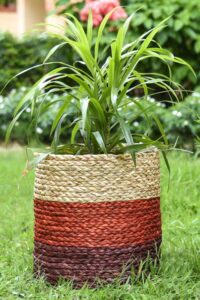
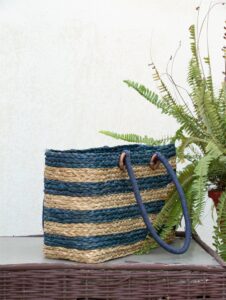
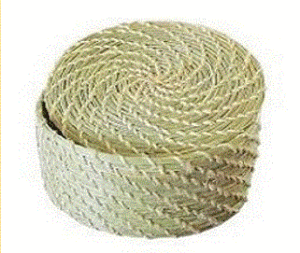
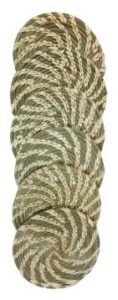
Sabai grass baskets
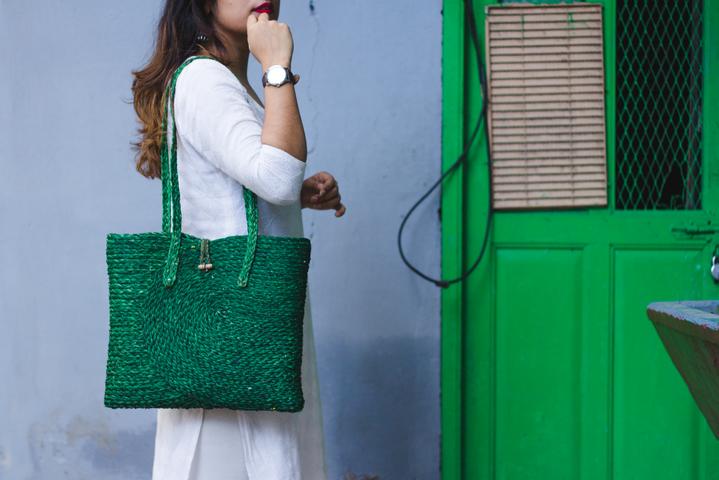
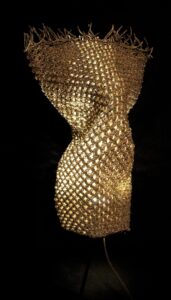
But recently, with change in demand Sabai grasses have been used to build many other products too. From ornamental items like wall hangings, light shade decors to daily use utility items like floor mats, bags and baskets also being built now a days. Because of demand of modern generation, I have witnessed laptop bags made up of Sabai grass too. Those were beautiful and eco friendly.
Laptop bag for women – made up of Sabai grass. You can purchase it here
But things were not rosy always. This craft was mainly used by tribals of Mayurbhanj as extra source of income or hobby only. And because there were not much variety of products being produced, the demand was low & due of this the potential boost to economy from this craft was unthinkable. However females from remote areas are responsible for nourishing and keeping this old age craft alive.
I came across a nice video from a group of such strong women who work hard to make their dream come true but got hit by Covid’19. They are planning to start an ecommerce platform to showcase and sell their products.
Another such website is https://kalagharstore.com/ who are working with women in rural sector of Mayurbhanj. They have nice collections too.
Mayurbhanj to export Sabai crafts to international market directly
We have formed nearly 50 clusters of artisans who belong to different villages in four blocks—Baripada, Betnoti, Moroda and Kuliana. The artisans are mostly women who were trained under master designers from the Ahmedabad-based National Institute of Design (NID) in 2016. Now, they not only earn decently, but also receive huge acclaim for their works displayed at different exhibitions in cities like Bhubaneswar, Delhi, Kolkata, Mumbai, Hyderabad and Lucknow,” said B Mal, the assistant director of the Mayurbhanj wing of ORMAS (Odisha Rural Development and Marketing Society).
With the help of independent bodies like Odisha Rural Development and Marketing Society(ORMAS), Asian Heritage Foundation (AHF), New Delhi and the Rural Active Women’s Handicraft Artisan Association (RAWHAA) at Baliapal in Balasore district, the women in the rural areas of Mayurbhanj not only learnt to build new products from Sabai grasses but also polished their old skills to create better quality products.
In the past, mostly the products were being sold in the local markets only at a very low price. However with penetration of internet and modern times, lot more buyers came across this craft directly. FabIndiais one such example who directly buys these crafts from Mayurbhanj’s sellers and resale them to other markets. This has given a boost to rural economy of this district.
Recently in Nov ‘2020, Mayurbhanj has become the first district ever to get an international license to export Sabai crafts directly.
Worth mentioning that lately 22 types of Sabai grass products have been exported to Florida by the Odisha Rural Development and Marketing Society (ORMAS).
There are further plans of these products to be exported to America, Britain and other developed countries as per demands.
It is noteworthy that the Odisha government has granted funds worth 10 lakh each to 5 production groups to make sabai crafts so that they can be exported in near future.
Sabai Grass Products Mayurbhanj
Many of these products have already made to Amazon thereby open to larger customer base. You can check them out below :
If someone is interested in bulk purchase. Please contact https://www.greencraftindia.co.in/. This exporter is from Baripada only thereby surely authentic.
Local folklore on origin of Sabai grass
While researching on this topic, I came across a very interesting story of six bothers and their sister which tells about the origin of Sabai grasses. Its a local folktale forgotten by modern generations.
It is said that once upon a time there were 6 brothers used to live with their sister near to a forest. Everyday brothers used to go to forest for gathering woods and hunt some animals. And sister used to stay at home and cook for their brothers.
One day when brothers were gone, and sister was getting ready to cook – while chopping the vegetables she mistakenly cut her finger. Few drops of the blood from her finger got mixed with the veggies which she cooked unknowingly.
Late in night when her brothers came, she served them the dinner. Brothers noticed that the food was tasting great that day. It was sweet and very yummy. They asked about it their sister and the scared sister told the truth. That night, the brothers had a discussion that if few drops of blood made the food so tasty how good her meat would be ? With this devilish thought they hatched a plan to murder and eat her.
However the youngest brother “Lita” wasn’t happy about this. He tried to oppose but everything went into vain.
As par the plan, next day brothers brought a very beautiful flower for their sister. It had seven petals having seven different colors. This was the first time when she was witnessing something like that. She got mesmerized by the beauty of the flower and asked her brothers if she could have more. Brothers said – it grows on a tree inside deep forest and next day she could come with them and pluck all the flowers what she needs. Happy with this thought, sister went early to bed to get ready for forest the next day.
Next day, she gladly went with her brothers to the forest and they took her to the tree with that flower. She climbed the tree to pickup the flower, and when she was up in the tree , they started firing arrows on her to kill her. Unfortunately “Lita” was the best hunter their group and they forced Lita to aim for her and kill her, which he did.
When the body fell down, they asked Lita to take it to the pond and clean and cut it into pieces to make it ready to cook. With heavy heart, he took her sister’s body the nearby pond. He was so much filled with sorrow that he sat down near the pond and started weeping. Suddenly a large frog from the pond, shown up and asked Lita – “whats the matter ? ” . And Lita told him all the story – how he was made to kill her sister and how his brothers are getting ready to eat her. Listening to this, that frog Lita a large Rohu fish, which he cut to pieces and wrapped around Sal leaves.
After hiding his sister’s body in nearby bushes, he took the wrapped Rohu fish pieces to his brothers which they cooked and ate. Later they returned to their home. While returning back suddenly Lita told that he has forgotten to pickup his hunting bow which he had kept near the pond. So he needs to go back to get it. Saying so – he went back to the forest and his brothers returned to home.
Lita went to place where he had hidden his sister’s body. He cleaned it up and buried it but decided never to return back home. He built a small hut near the grave and wept on it for days. Suddenly one day, Lita saw that her sister came back alive. Lita was overjoyed and they lived happily in the forest for some time.
One day, a Raja came for hunting in the forest. On passing near the hut he saw the girl and fell in love with her. He decided to marry her and make her queen.
In honor of marriage, Raja decided to build a huge water tank and people came from far to work there. Among all came her five brothers, who had fallen into great poverty. Destiny never forgive those, whose deeds are wicked. On realizing its her brothers, looking at their poverty the sister forgave them.
However they were so ashamed of their deeds that they could only kneel, touching their head on the ground. As they continued to do so, the Earth splattered and swallowed them up. Only their hairs stuck upon the ground, which became “Sabai grass”.
That’s all folks. Tell me in the comment section if you liked the story.
Mayurbhanj is famous for its dense forests and tribes. Large part of this district is influenced by traditional food and culture. The native tribes play a vital role in cultural aspect of the society. Where the access to technology is seldom, natives still manage to find solution to their problem through their indigenous resources and methods.
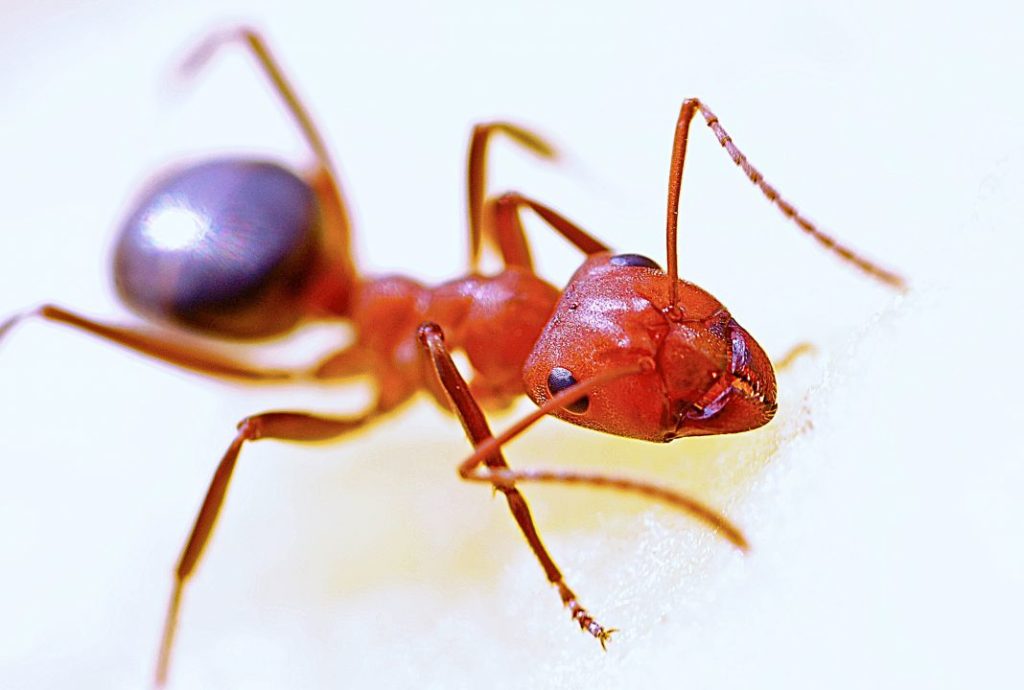
A red ant also called as “fire ant”
Out of all the natural goods, recently, red ants chutney of Mayurbhanj got an international attention when an Engineer claimed that it is a cure for covid’19. Read more about his claim below:
Though I am neither accepting nor debunking their claim, but I came across a nice research on “Traditional Value of Red Weaver Ant (Oecophylla smaragdina) as Food and Medicine in Mayurbhanj District of Odisha, India” published in IJRASET (International Journal for Research in Applied Science & Engineering Technology) in their May 2020 Volume 8 Issue V. This research is done by North Orissa University. I am going to share about their findings here.
How & where red ants are found ?
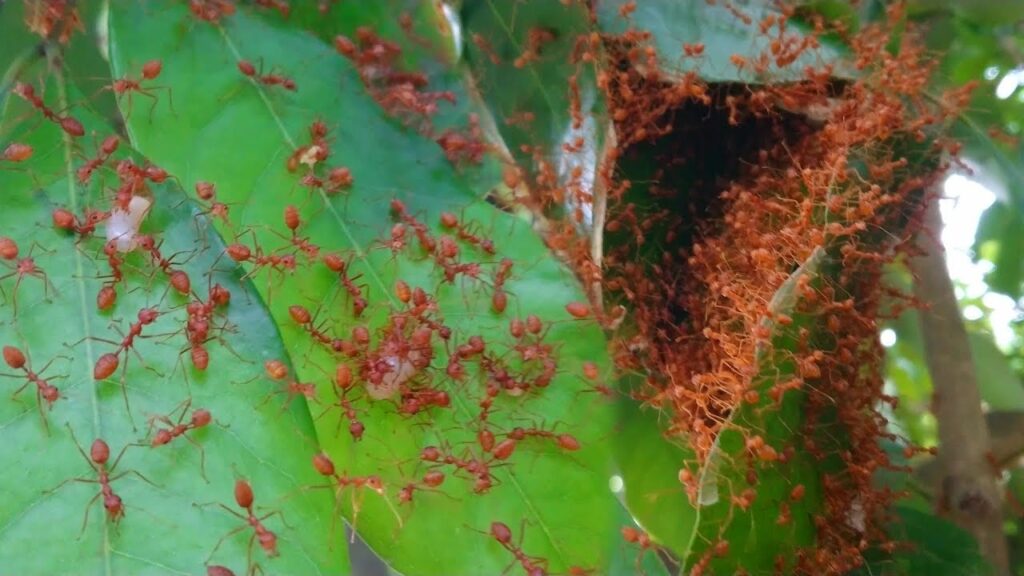
The most preferable plant of the red weaver ant is mango tree besides that they also build their nest in other plants like Sal tree, Kusuma tree, Kendu tree, Sapeta tree and sometimes found on the rock surface in the hilly areas covered with dense forest. The rich flora of Mayurbhanj provides a natural habitat for these ants. The nests of these ants look like small pouches made of leaves.
Pouch of leaves – nest of red ants
Traditional Usages
The native tribes living in the vicinity of the forests have made these ants part of their culture. They are dependent on these ants or their products directly or indirectly from centuries. There are different areas in which Red ants influence them like –
In Diet :
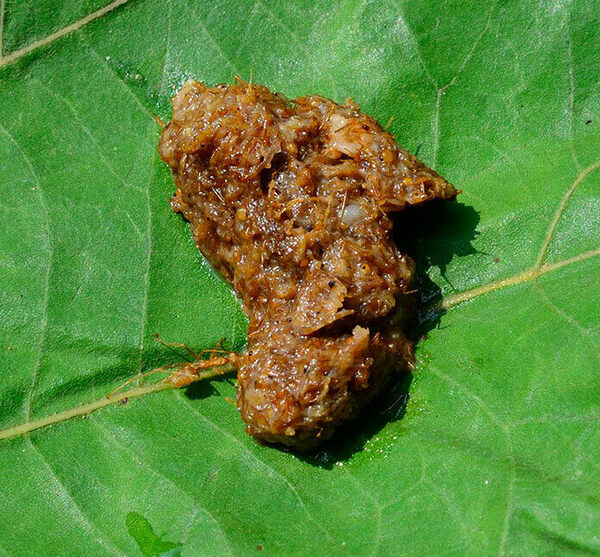
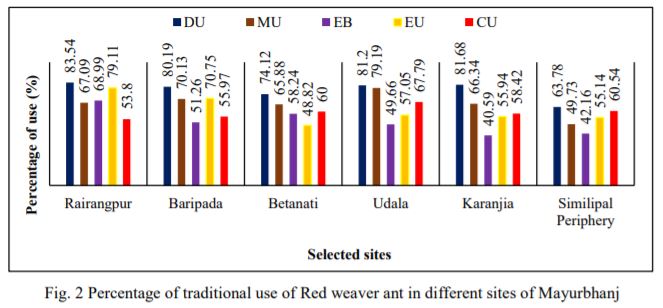
Often called as “Kaii” or “Kurkuti” in the local language, people consume these ants and their eggs in form of chutney. They consider these as very nutritious. Except the adult form of ant (Ant with wings), all other forms are good for this recipe. Ingredients of red ant chutney : Crushed and mixed with different local herbs like fresh coriander leaves, green chili, ginger, garlic and a bit of salt and sugar – thick orange colored chutney is prepared. The report says – “The tribal communities of Rairangpur (DU: 83.54%), Baripada (DU: 80.19%), Betanati (DU: 74.12%), Udala (DU: 81.2%), Karanjia (DU: 81.68%) and Similipal periphery (DU: 63.78%) are most preferably using this in their day-to-day life”.
Red ant chutney
This recipe made it to celebrity chef Gordon Ramsay’s menu, thereby getting an international recognition.
Gordon Ramsay in India – Trying red ant chutney
In Medicines :
The red ants are very useful in different types of diseases.
For example – In common cold, it is used as medicine with a small dose. The whole body of this ant, with the eggs was crushed and makes aqueous form, mixed with required amount of special green chili (Dhanua Lanka) and spoon fed to patient.
The report says – “In Betanati and Rairangpur area the smell of crushed freshly collected red weaver ant is inhaled for several times in a day and remarkable result is obtained within 2-3 days.”
The crude extract of this ant also used as an acidizing agent for enteric gas problem.
In vomiting, the brood content is crushed to obtained aqueous extract and then the juice will be given to the patient. It has seen that the vomiting will stop within 5-7 hours.
In case of Whooping cough, the aqueous extract of whole body of worker ants and the juveniles are used and the patient will cure within 2 to 3 days.
It is also useful for Jaundice; the aqueous extract of whole body along with the eggs is used. The aqueous extract is given to take orally to the patient and the extract is smoothly rubbed on the skin to avoid the yellowish color, effective result is found within 1 to 2 weeks.
Particularly in Rairangpur area the jaundice patient can put about 100 and more ants over the skin surface, the vigorous biting of this red weaver ants can cure him. Besides that, it is also used as appetizer to make a person feeling hungry within 15 to 20 minutes.
In Economy :
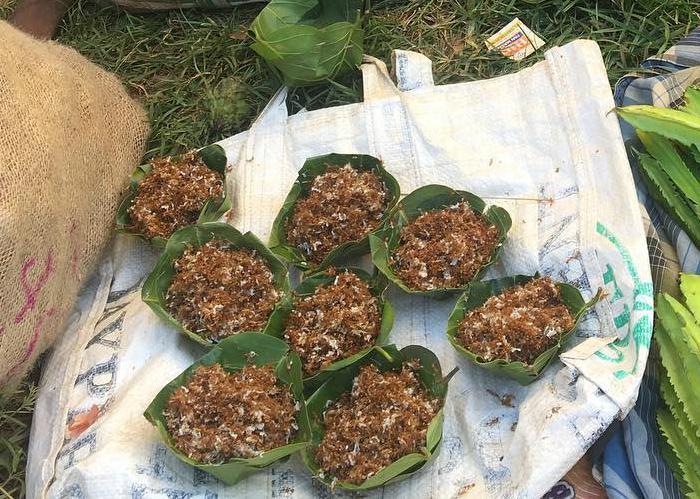
Red ant chutney in a flea market
Ants and its eggs are either sold directly in the market or in the chutney form. Local flea markets like Station-Bazar market of Baripada is often flooded with these on flea bazaar day (Thursday).
Sold for 10rs a packet (approx. 100 gm), these provide an essential support to the natives and their family.
Generally, the harvesting rate goes high because of high demand during winter seasons.
Research on red ants
Data Collection:
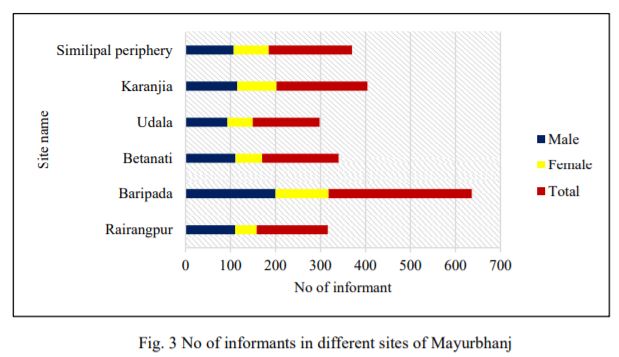
Entomological investigation was conducted in selected village arears of Mayurbhanj district located in northern part of Odisha, India. The documentation of traditional entomological practice of red weaver ant were obtained through structured questionnaire survey, local interviews and field studies in Mayurbhanj district during 2017 to 2018.
Demography:
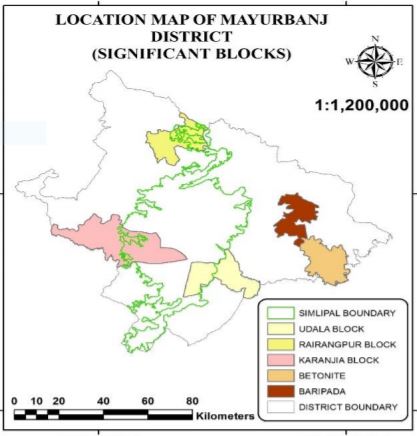
Field survey the Mayurbhanj district were done in six selected zones. The selected sites were:
Rairangpur which is full of hilly areas located at north direction
Baripada a centre place of Mayurbhanj district located at the north-east region of the district represents the Baripada town and nearby urban areas
Betnoti is one of the most populated area of tribes with a population of 1, 50, 434
Udala located on south-east direction with most of the ethnic tribal communities having knowledge on plants and animals
Karanjia is the hilly area located in west direction
Similipal periphery villages is rich in forest and village areas.
The study concluded that consumption of red weaver ant species is remained unchanged over the years among the tribe but the information regarding why it should be consumed are lacking day by day. The prevalence of entomophagy practice of this red weaver ant species is still clearly remarkable among the tribes of Mayurbhanj district, but many practices and importance of use of this red weaver ant among these tribes need furthermore documentation in a wide area. Besides the red weaver ant, these tribes also utilize a wide range of biological resources in diverse ways. So furthermore, insects to be investigated and popularized, which will make efforts to deal with food crises and generation of new medicines in forth coming days. Further systematic scientific exploration on nutritional and medicinal values of this insect and its impacts on human health must be investigated. It has become mandatory to undertake research on traditional rearing, cultivation, sustainable management, while practicing on edible insects to maintain an integrity in insect biodiversity.
If you are hungry for more details, do checkout their research paper ( link given at the source ) and subscribe to our newsletter for free. And please comment if you liked this article. Your support encourages us to do more research and bring articles like this.
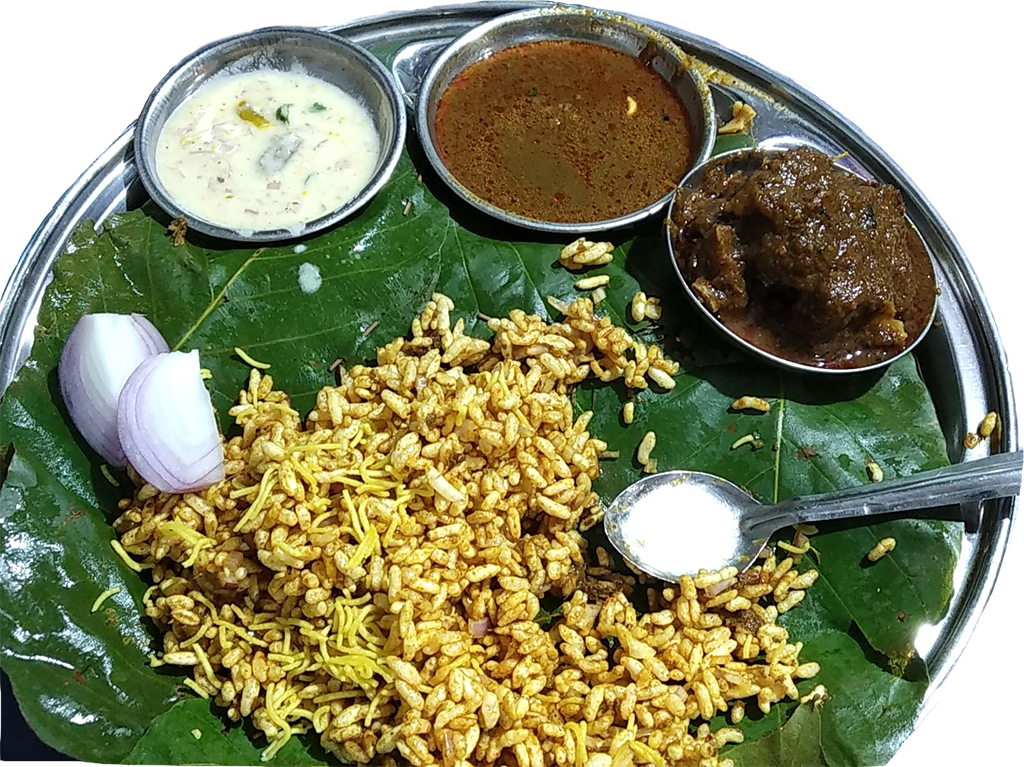
Mudhi Mansa is not just a food but an emotion of the Mayurbhanj people. Mixed with mutton gravy, and served with onion, green chilly and fresh coriander, Mudhi reaches to its zenith of taste. Only imagination of the food itself brings water to the mouth of people.
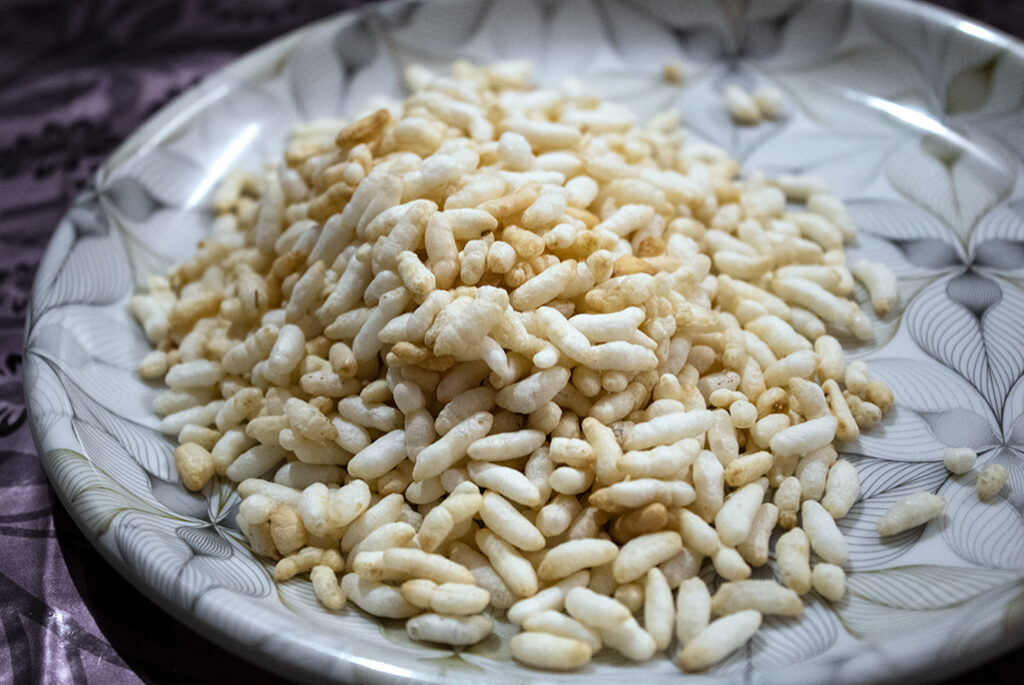
Mudhi – also known as Murmura or Bhel in some places and termed as “puffed rice” in English. It is the traditional food of Mayurbhanj. The home made mudhi of this region especially Baripada is very famous all over India. Though Murmura is seen and consumed as a snack in the other region of India, for Mayurbhanjias this is a staple food.
Only the curry in the plate is changed based on whether it is consumed as breakfast, lunch or dinner.
Blend it with some namkeen mixtures, onion, a bit of chilli and lemon – and it becomes jhal mudhi ( a very famous street food in West Bengal ) and ready to be consumed as evening snack too.
In modern homes murmura is not prepared now a days. But in villages it is still made/cooked and stored in very large containers.
Mutton gravy – the mutton itself is very famous and loved by everyone here, but they are picky with their taste. It is said that the mountain goats which are bred on Sal leaves and grasses only – have the best meat. For the mutton gravy, the local onions are used which are sweeter and more aromatic compared to other onions which are common in market. The blend of different spices like Cinnamon, Cloves, GG paste with mustard oil gives it a different taste altogether.
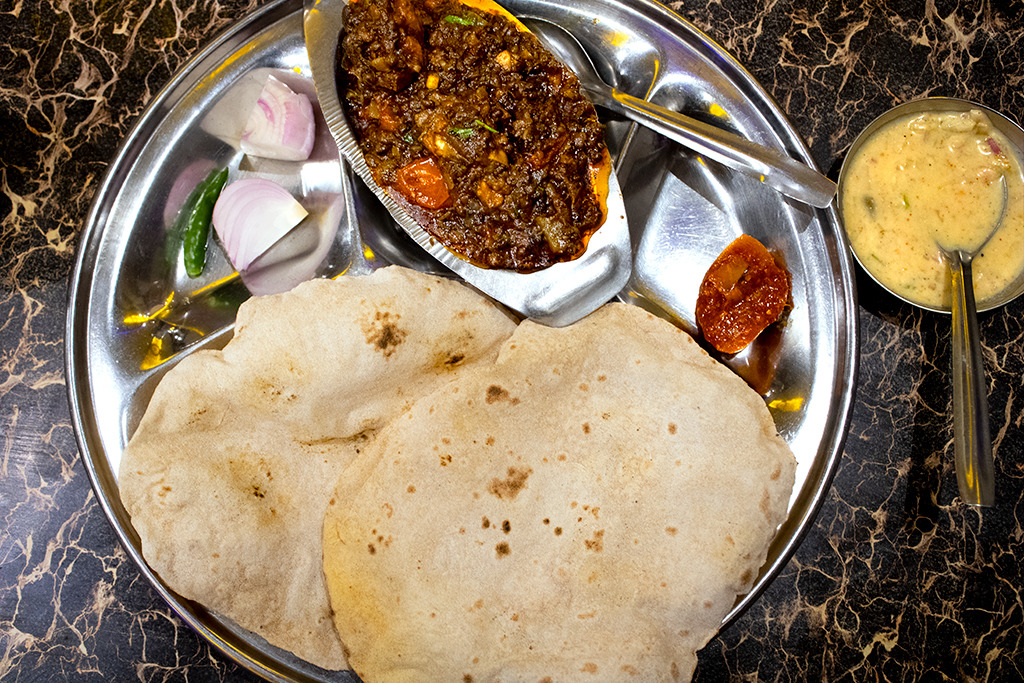
In recent years Mudhi Mansa has gone outside of Odisha and has attracted many food bloggers and outsiders too. I think most of the credit behind it goes to ‘Garma Garam’ restaurant in Baripada which is probably one of the oldest restaurant of the town. It is over 35 years old and with time it has modernised itself with modern facilities and cooking styles, without compromising the taste of food. The thali served by Garma garam restaurant has a special chatni accompanied with it. This chatni is hand prepared with Curd base and Greenchilli with sweet mango achar with it.
When I was there, I loved it the most but not able to figure out the base on which it was made of. Later when I talked to restaurant owner and showed my curiosity, he revealed it.
Checkout a vlog from Rohit, where he covered lot of foods of Baripada while he was here.
A vlog by Rohit Srivastava on Mudhi Mansa. Please checkout their channel and subscribe.
Other than famous masha mudhi plate – do try the liver thali and last but not the least my favourite Mutton tadka with roti – where they cook tadka and mutton separately and mix it to serve you. Do try that once.
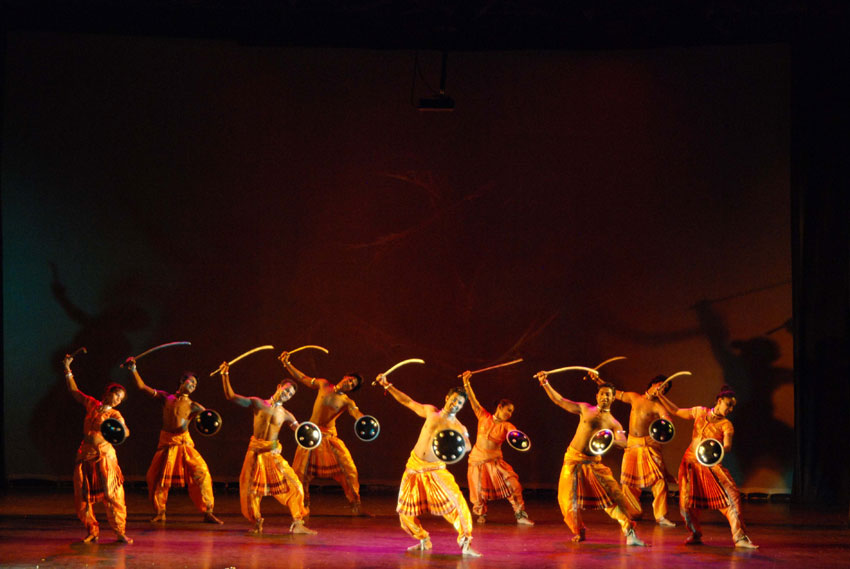
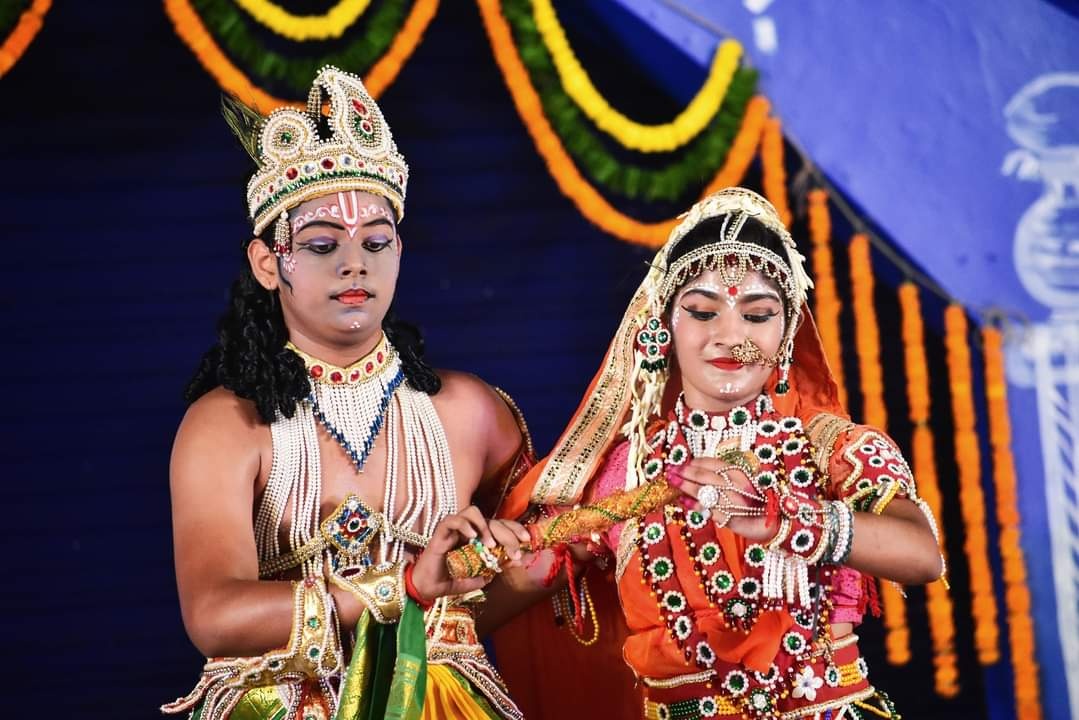
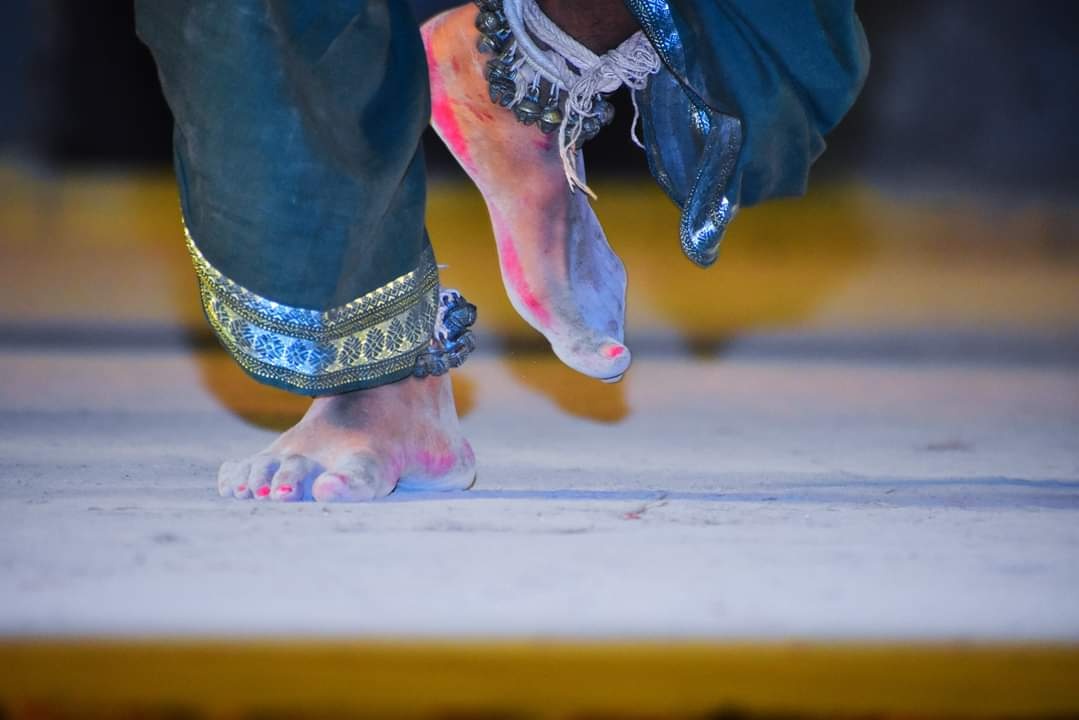
Although it is unknown how the word Chhau came to existence. Some say sanskrit word “chaya” ( means stealth or shadow ), is the mother of this word – some say it was “chadma” (disguise).
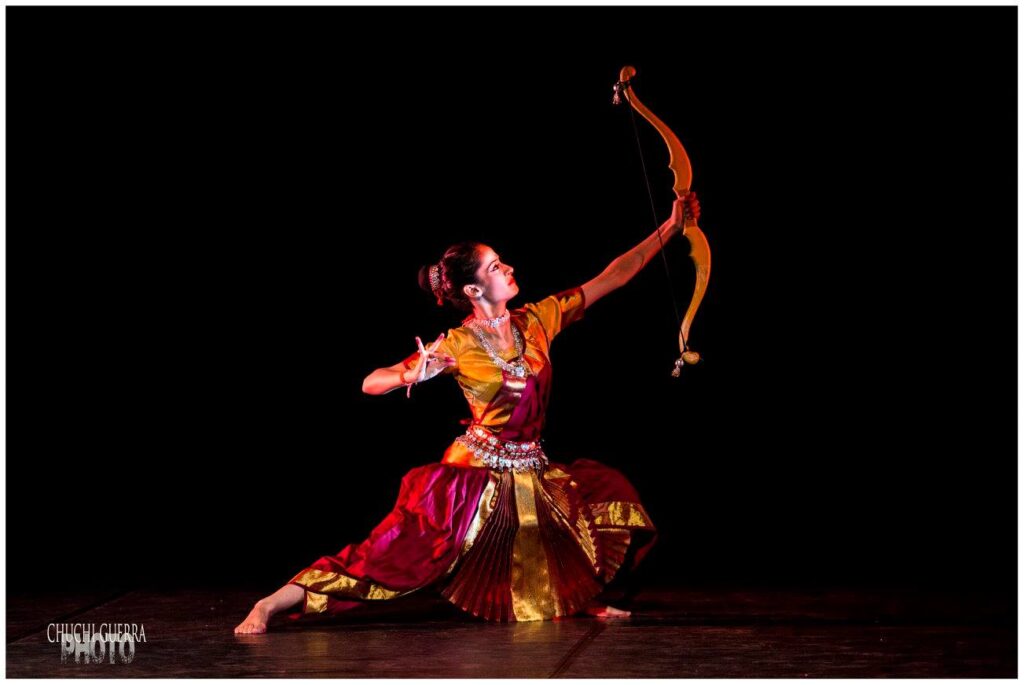
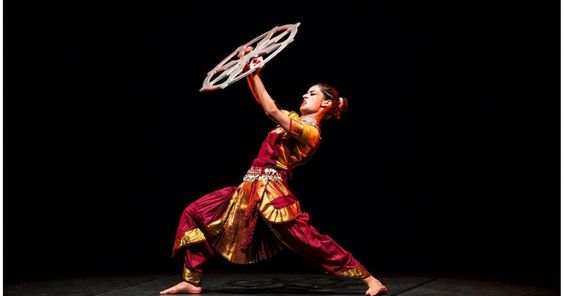
Equipped with many forms of dances and telling various stories from Ramayana, Mahabharata to traditional folk stories, this dance form has made a mark in the history and present of the world. Mentioned in UNESCO’s List of “Intangible Cultural Heritage“, this dance has already established itself as one the most important gem in the treasures of art & culture of humanity.
Types of Chhau
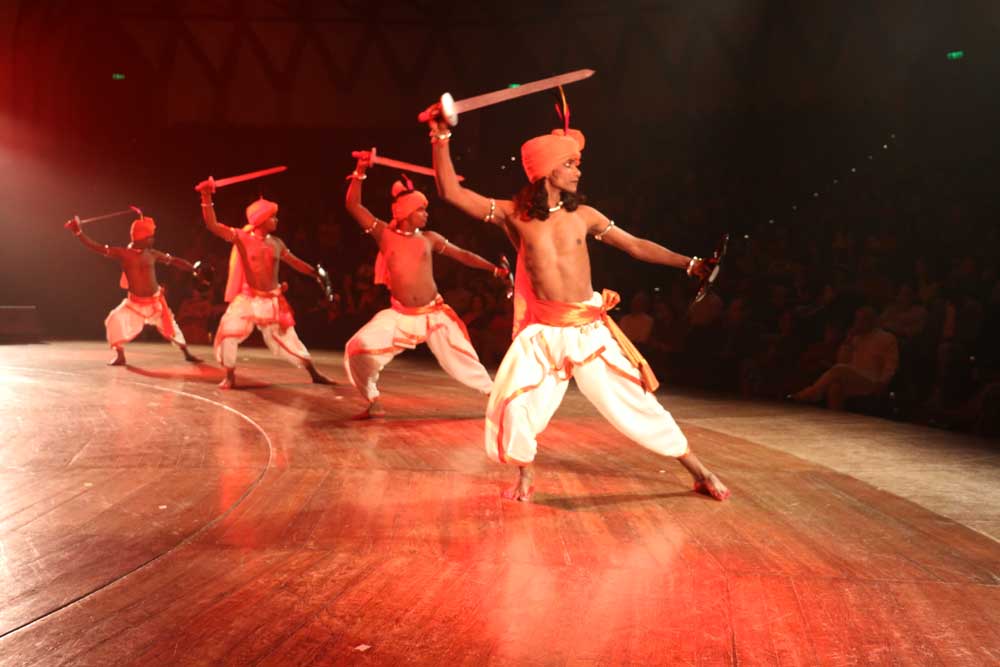
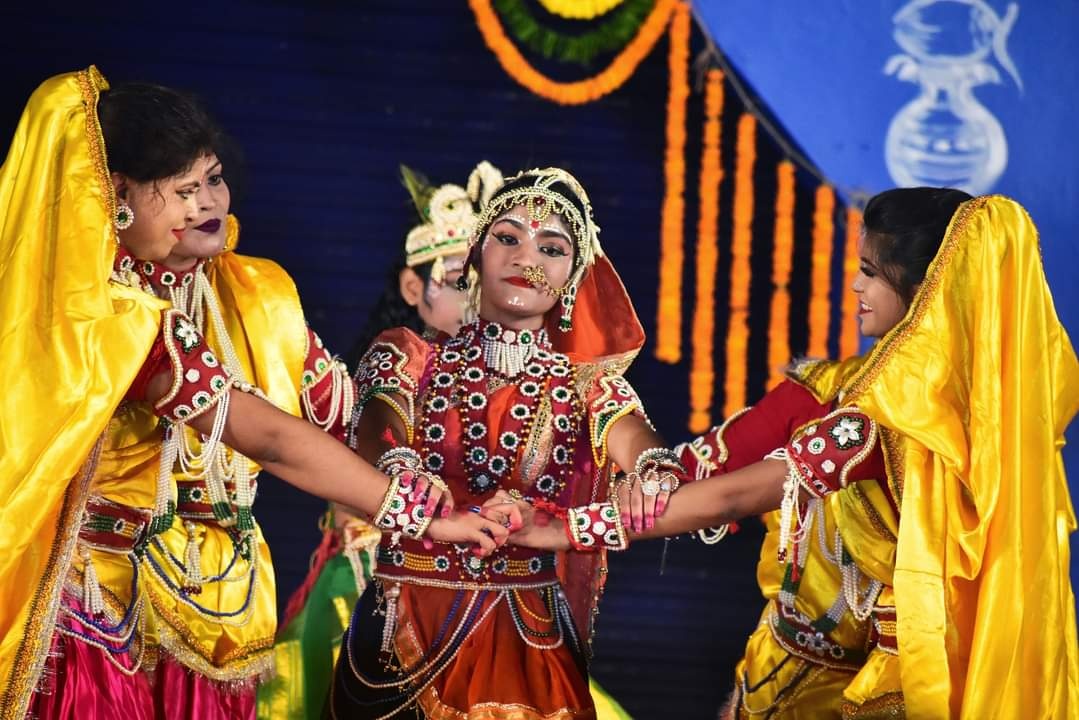
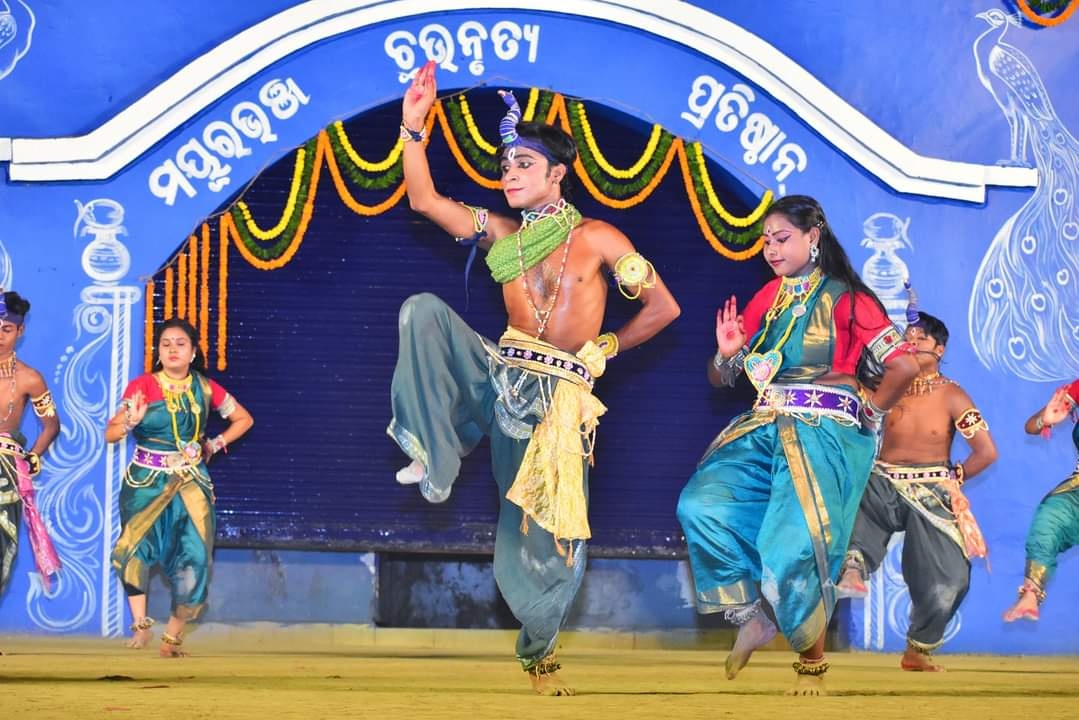
Although there are 3 types of Chhau, Mayurbhanj Chhau is different from its siblings (SeraiKella and Purulia Chhau). Unlike other forms of Chhau, Mayurbhanj Chhau dancers do not wear a mask, thereby exposing their vigor to the audience. Also it can be easily noted that this form has much more advanced movements and chiseled vocabulary, making it more frightening at the same time “captivating” to watch.
A still from 2017 Chhau Dance
In the early years, Chhau was completely martial and used to show different form of War. In fact – Maharaja Shriram Chandra and Pratap Chandra Bhanjdeo, the builders of modern Orissa composed the famous “War-Dance” and presented it in 1912 at Kolkata in honor of George V – the British emperor, who got amazed by the beauty and splendor of Mayurbhanj Chhau and appreciated it. Presses and elites also showed their love and it became famous.
The stories of Ramayana and Mahabharata were adopted later to the original form which till then used to cover mostly local folklores. The music accompanying the dance has its own style which invigorates the soul.
Some of the dance numbers are Kirat-Arjun, Makhanchor, Keuta-Keutuni, Abhimanyu Badh, Natraj, Mayashabar etc.
Chaitra Parva
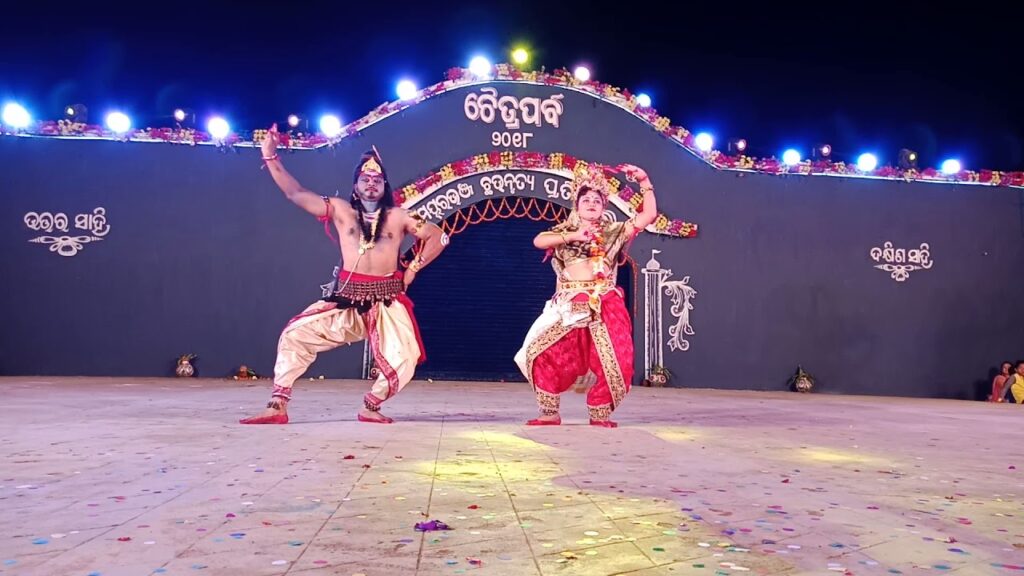
Chaitra Parva is a chhau dance festival observed annually by Chhau Nrutya Pratisthan, Mayurbhanj at Chhau Padia, Baripada. It’s a 3-day festival starting from 11th April to 13th April every year.
There are two main association of dancers participate in this festival namely Uttarsahi Sahi and Dakhsin Sahi.
Shiva & Shakti
Apart from these 2 groups, different selected rural dance group (around 15-20 dance group) across the district also participate in this event. 1st-day rural dance groups dances, later other groups performed dance day by day on 12th and 13th April.
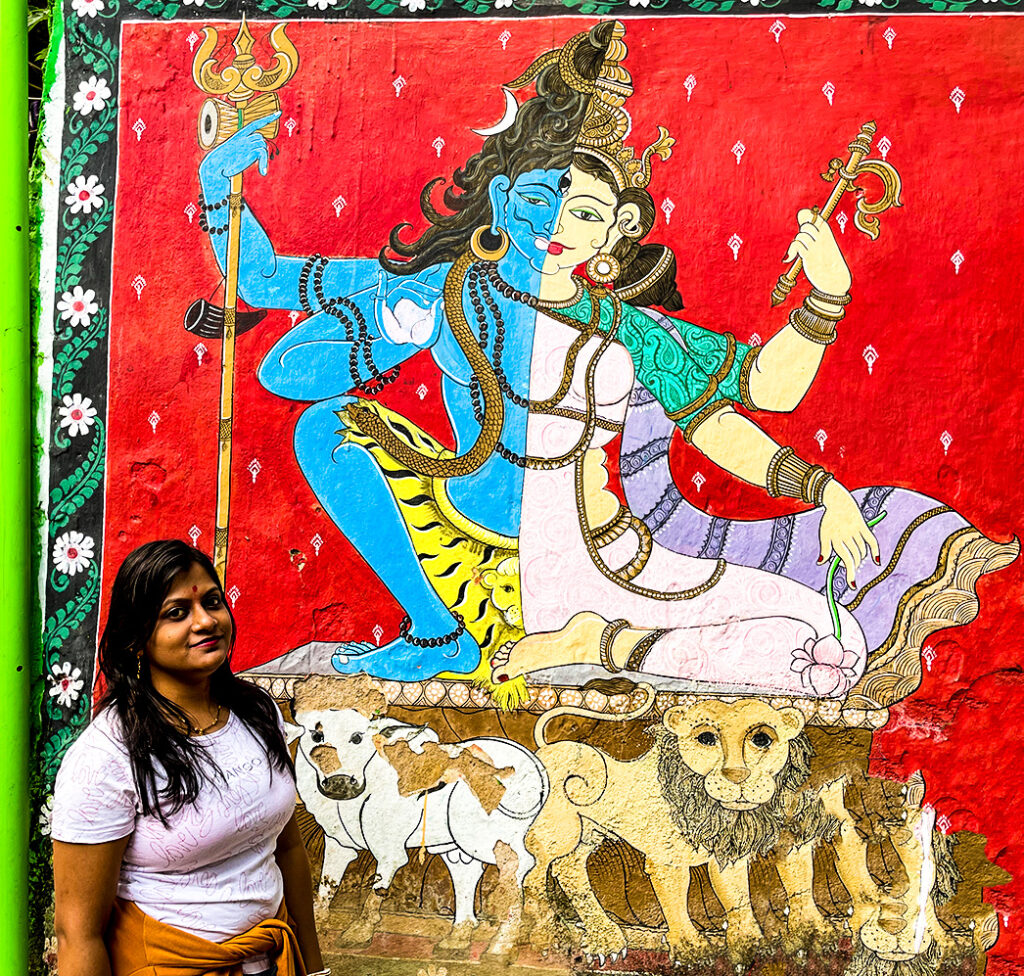
Chaitra Parva is not just a festival. It is an emotional bond as it focuses on the artistic culture of Chhau dance. The dance form is acclaimed for its composition of various elements which have enriched the tradition of Mayurbhanj. This dance form follows the basic principles of Natya Sastra or Bharat Muni and Abhinaya Darpna. Organized by the two associations and Chhau lovers, the festival also aims at promoting tourism and tribal art and dance forms. The festival is dedicated to Shiva and Shakti.
Project Chhauni
In the year 2016, the District Administration Mayurbhanj headed by Sri Rajesh Prabhakar Patil (IAS), Collector, Mayurbhanj considered to initiate a movement to reestablish the lost glory of Mayurbhanj Chhau, bring it back to its pinnacle performing stage and provide the artistes their proper due, so that Mayurbhanj Chhau will not go into extinction in its own land and the people involved in it will regain their interest to take up this art form professionally. Coincidentally, A workshop presentation in the same line was delivered by a Mayurbhanj Chhau Artiste Subhasree Mukherjee, on the eve of Chaitra Parba, 2016, the annual Chhau festival of Mayurbhanj. And simultaneously a project was developed by her named “Project Chhauni” for the development of the art and artistes of Mayurbhanj Chhau. Project Chhauni was launched on 19th May 2016, at DRDA Conference Hall Baripada
Because of efforts of Project Chhauni, Chhau dance has got international attention and many dancers from outside India, continue to come and learn it. Many notable modern dances where aggressive movements are needed, are often inspired by various form of this dance.
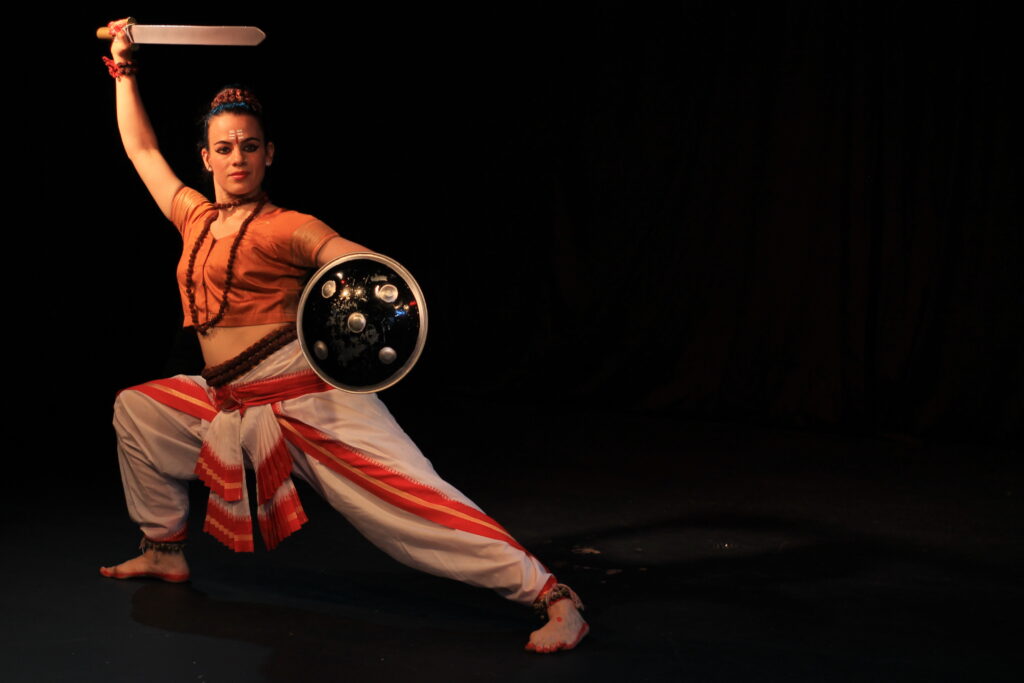
A leading professional female dancer of the tradition today, Carolina Prada performed in the famed Uttar Sahi Chhau troupe of Mayurbhyanj in the 135-year-old prestigious Chaitra Parva hosted in Baripada.
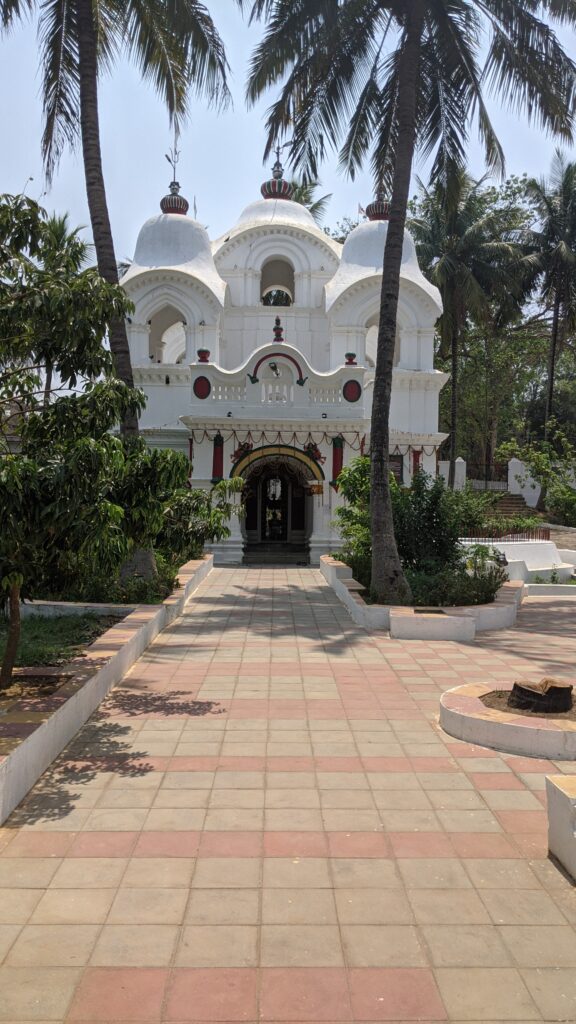
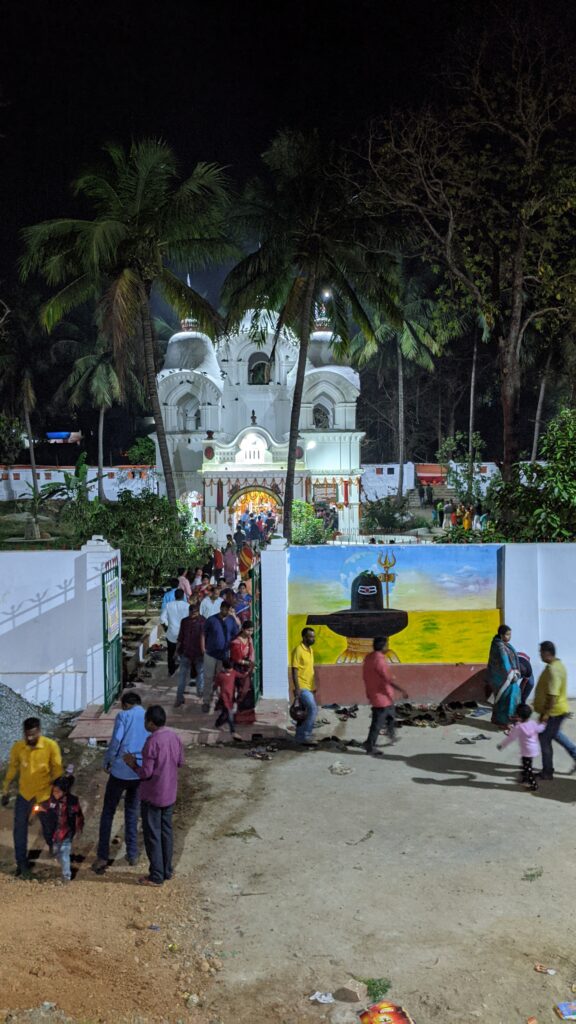
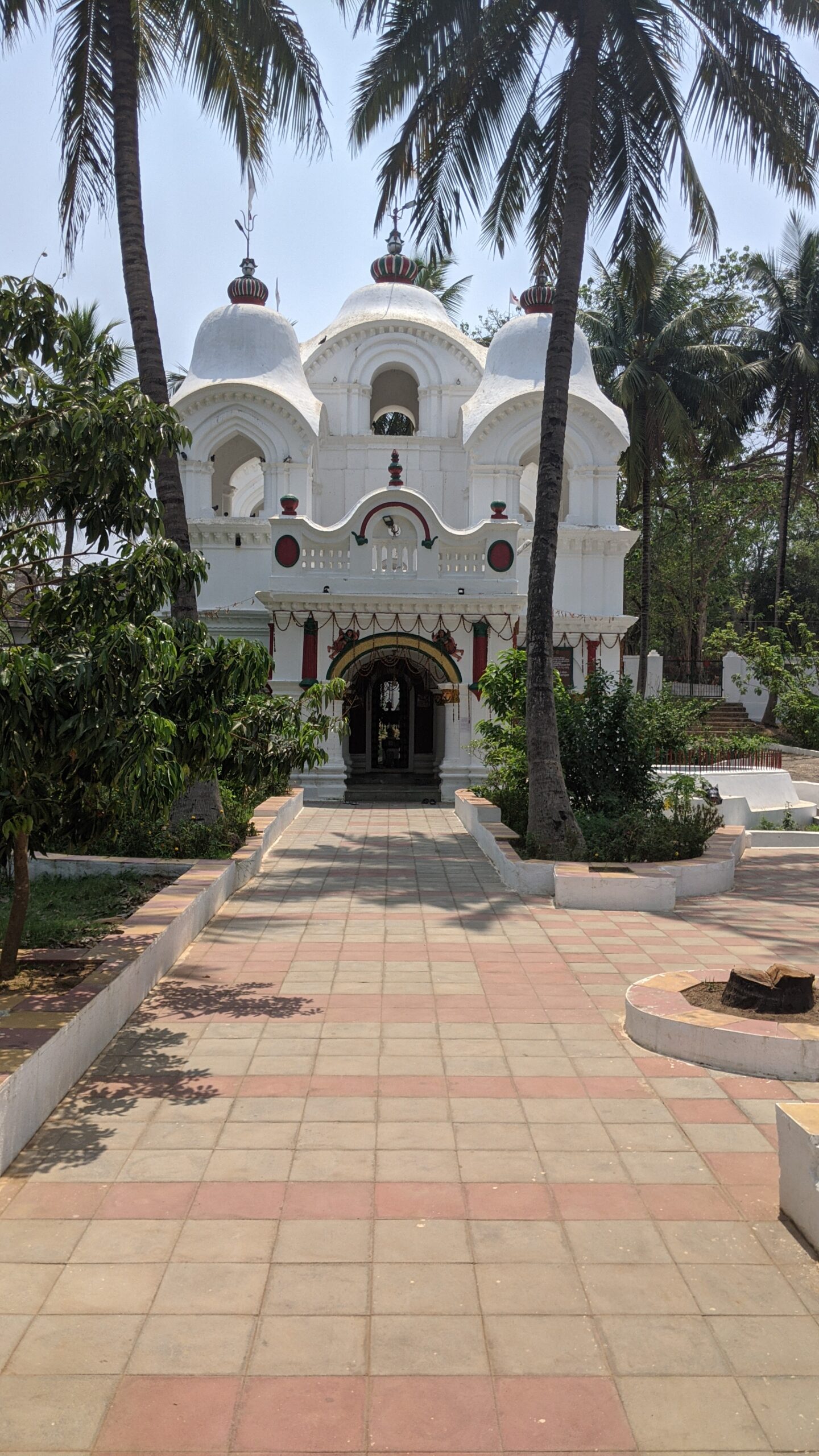
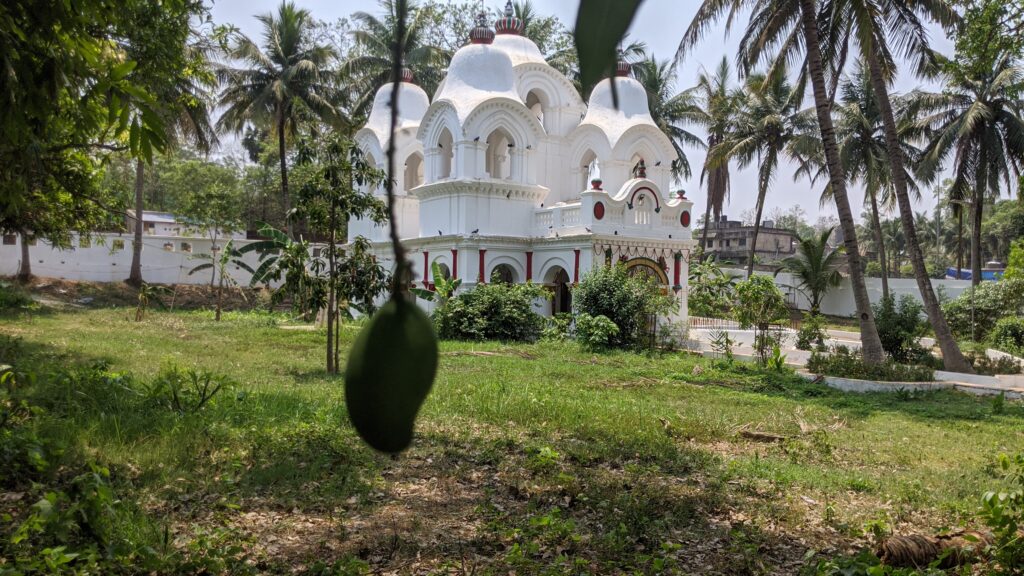
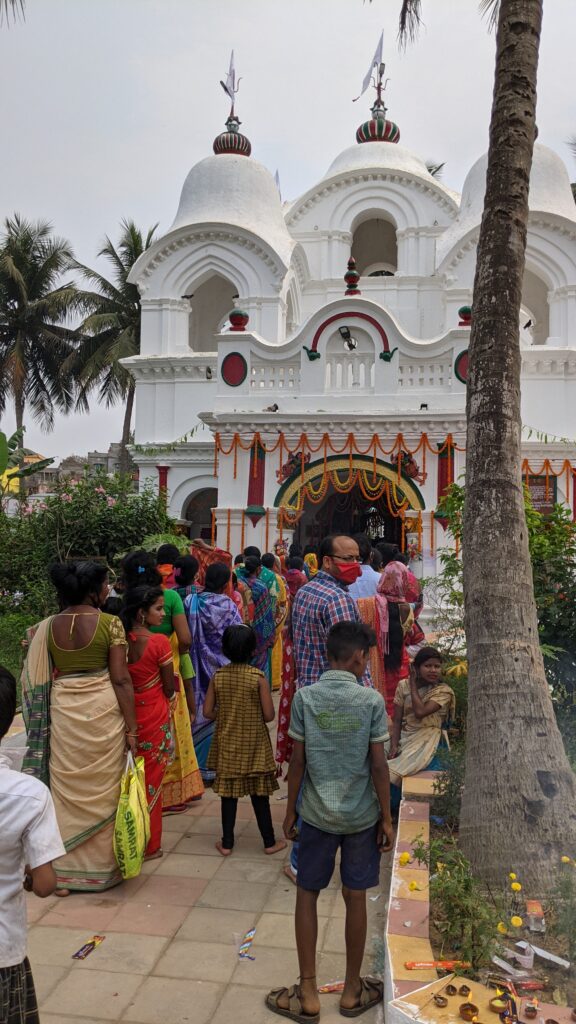
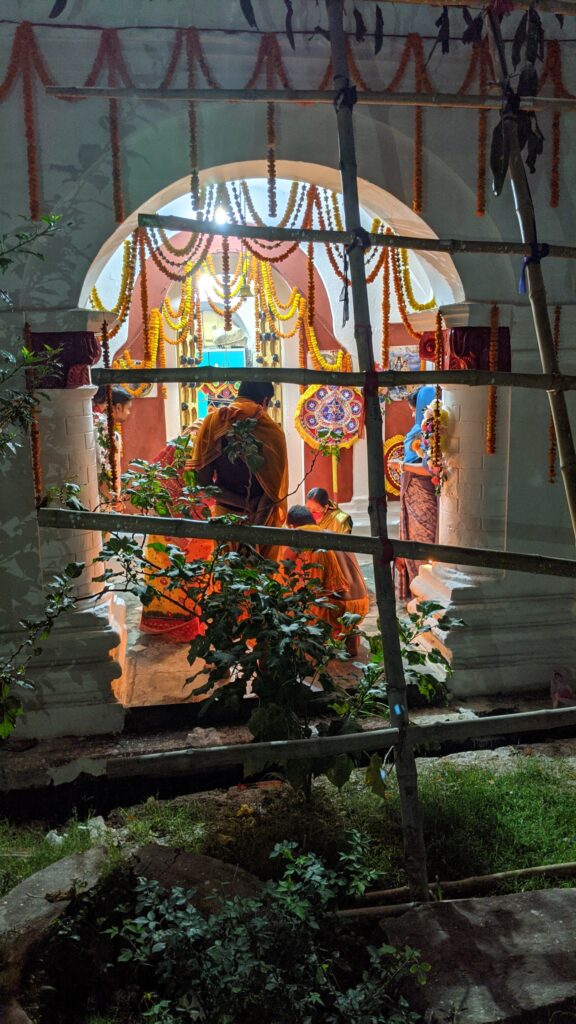
Baruni Shiva mandir is the one of the major temples in Baripada, Mayurbhanj. Established in 19th century, this temple is a major attraction on Maha Shiva Ratri. The temple is standing on the bank of water stream “Jarali Sarali”, which later meets with main river of town “Budha Balanga”. Town’s major burial ground ( Shamshaan ghat ) is also nearby. Again a very famous Kali temple called as Baruni Kali Mandir is also in the close vicinity of it.
Because of its remote location, this place is feels equally fulfilling and void at a same time.
Temple at day
Temple at night
Architecture & Design
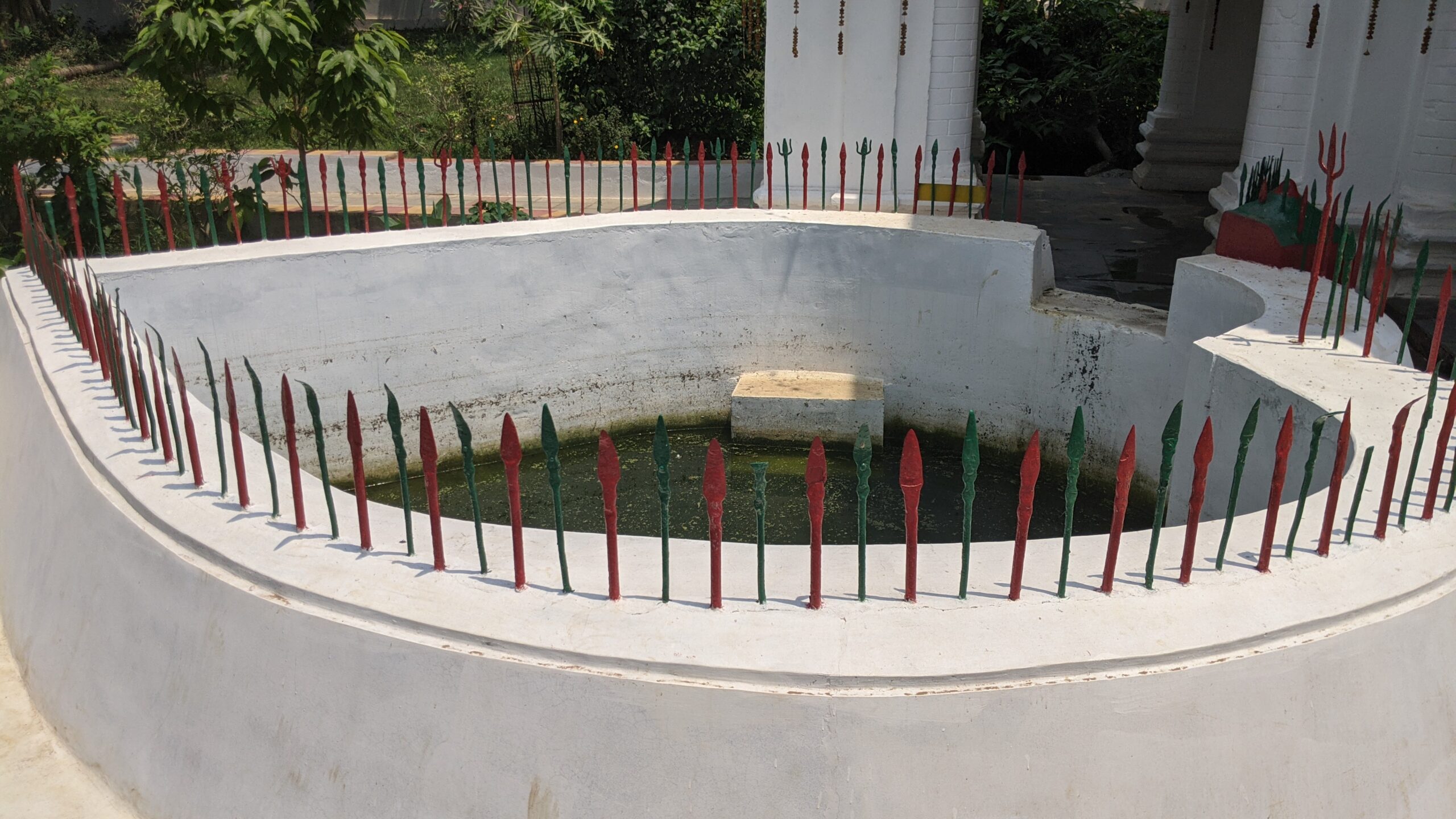
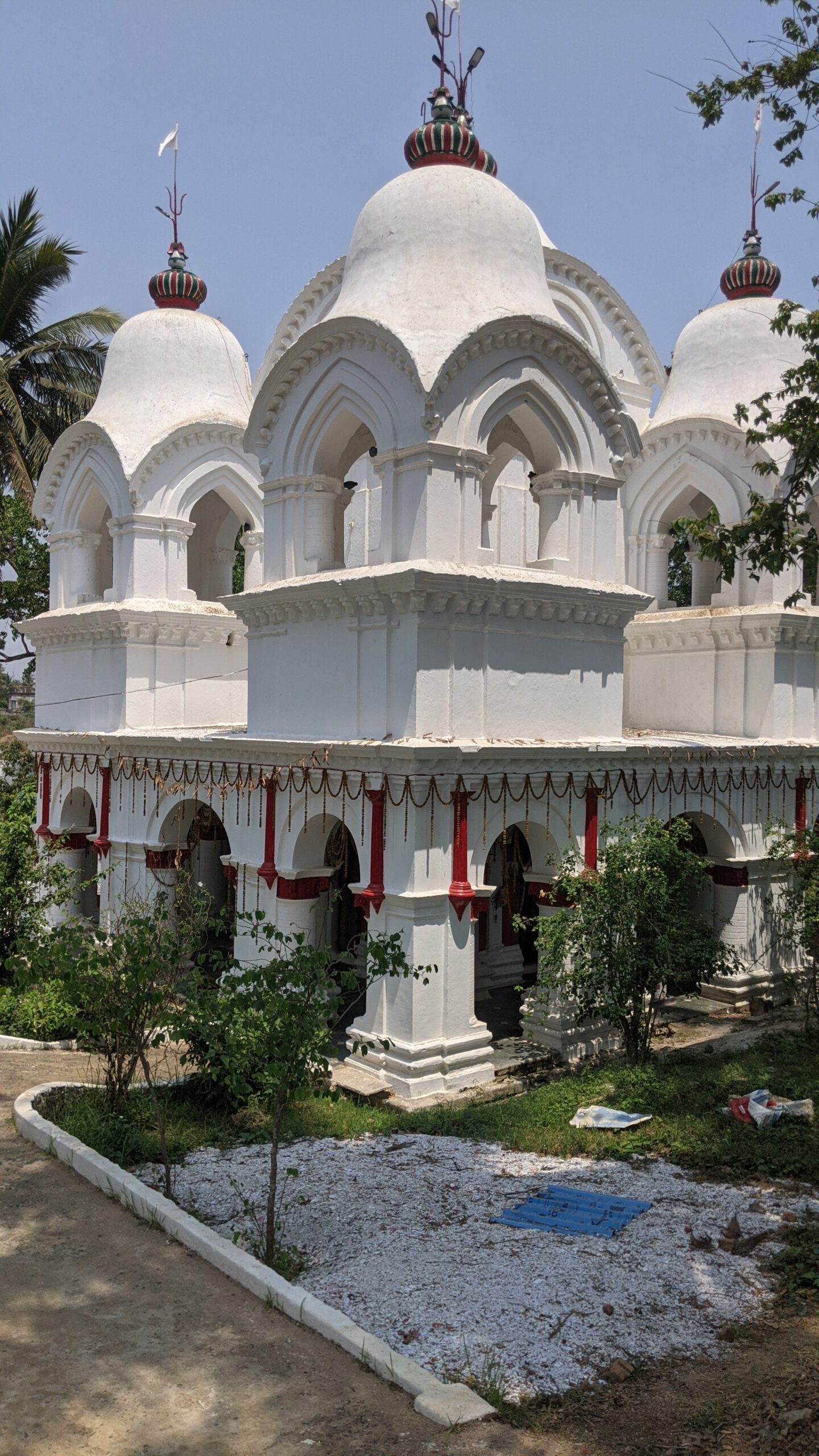
This temple is a punchmukhi mandir that means it has 5 domes. There is fresh water pool which is built like leaf of peepal. Whole temple has many sculptures of animals and birds like lion, pigeon, snake, elephant etc.
5 Domes can’t be seen from any side directly. But it is said that at a certain angle from south it can be viewed.
Timings to visit
Pooja is done only in the mornings. Good time to visit here is 8 – 11 AM. However on Mondays or special pooja days, priests would be available till approximately 2 PM. On very special days of Shiva like Mahashivaratri, it remained open for the entire night.
However if you just want to visit the temple’s vicinity only then you can go anytime during day.
Prasadam
There are no shops in the vicinity of the temple. But sometimes, you can find some “Rehdi wala” selling coconuts, bananas and diyas.
Vegetation & Flora
The temple vicinity is full of many plants and trees. Few of them are for decorations and flowers but other few hold specific importance. The presence of Rudrakshya tree makes it more serene. If you are lucky enough you will find a rudrakshya laying around in the vicinity of tree.
History & Lore
The temple is almost 200 years old and was built by “Dharma Chandra Bhanj Deo“. However the Shiva Lingum was already here, which only maharajas used to worship before going for war.
Before the establishment of the temple, this place was a marshy land where normal people used to avoid going. Story says that once raja Dharma Chandra Bhanj Deo who was brother of then crowned king , was had come to this place on his elephant. Suddenly elephant’s leg got stuck in the marshy land and was not able to move. Being a devotee of Shiva, Dharma Chandra Bhanj Deo, felt strong presence of godly power here.
After trying for long and failing many times, he called for more men to help. Dharma Chandra vowed to build a temple there for God Shiva if he gets a son and miraculously his elephant was able to move out after that. This reinforced his faith of Shiva.
Then came the day when the work related to temple begun. But soon they had to halt the work because of marshy land. It was a difficult engineering problem to solve. The masonries were not able to hold the structure, and entire structure was getting collapsed.
On clearing some more mud, a secondary source of water was discovered, which was continuously flowing with fresh water. Being surprised and horrified at the same time, a separate small pool was built around it.
To hold the mud flow, a huge copper plate was imported from Myanmar and placed. The entire structure was then built over that plate. It is said that temperature of the floor of the temple feels way cooler than the scorching outside temperature because of this plate and the land beneath the plate is still marshy.
To reach here you will have to reach Baripada. People coming from outside need to reach Mayurbhanj first. Please check “How to to reach ?” page for more details.
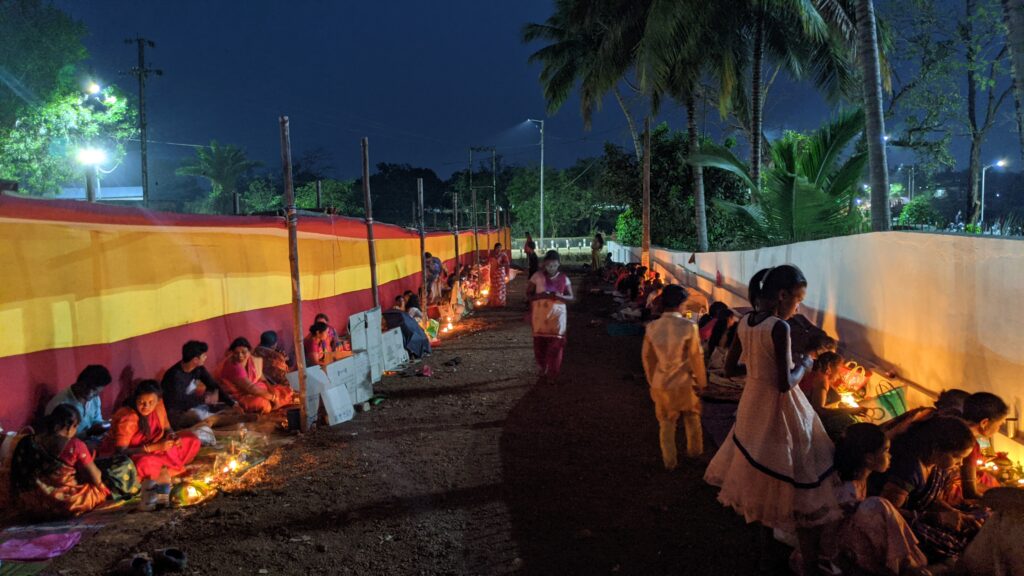
A glimpse of Mahasivaratri 2021
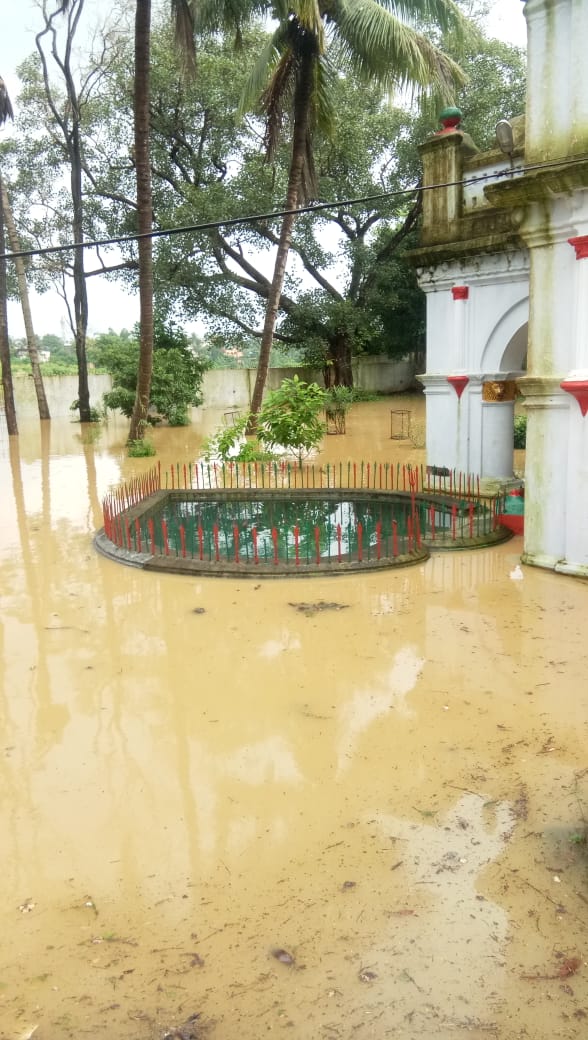
Interesting Event ! During the flood of 2015, the entire area was submerged in water. But the natural fresh water pool about which I talked to you above didn’t get contaminated at all. The continuous stream of fresh water didn’t allow mud water to come in. Note how the pool’s water is still blue.
There is a tree in the vicinity where maharaja “Prafulla Chandra Bhanj Deo” used to do his sadhna. Try to find that tree when you visit here. Let me know in the comments if were able to do that.
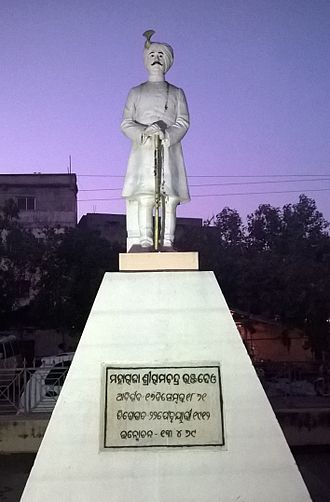
Men and women come and go and most of them become only distant memories. A few however leave behind impression, powerful enough to continue to remain almost as living presence long after they have gone. Maharaja Sriram Chandra Bhanja Deo, no doubt has left a rich legacy behind him and indelible footprints on the sands of time.
Born on the 17th December 1871, Sriram Chandra was the son of Maharaja Krushna Chandra Bhanja Deo, the illustrious king of the Mayurbhanj State. Sriram Chandra was unfortunate enough to have lost his father, when he was barely 11 years of age and hence the state came under the administration of Court of Ward with Mr. P. Wylly as its manager. He assumed direct control of the State in 1890.
As a ruler of practical wisdom Sriram Chandra Bhanja Deo brought with him Sri Mohini Mohan Dhar, M.A.B.L. who was his private tutor in the Ravenshaw College at Cuttack and appointed him successively as Adviser, State Judge, Dewan and Vice-President of the State Council. Sri Mohini Mohan Dhar became the defacto counsellor of the Maharaja in all matters.
Maharaja Sriram Chandra Bhanja Deo could trace out the main causes of speedy development of other states and he had taken up the same process to develop his state to compete with or even surpass others. As an enlightened ruler he established State Council in 1893 to meet the requirements of a democratic Government. The Council introduced the criminal and civil codes as followed in the rest of India. Other Rules and Regulations on various aspects of administration like Tenancy, Revenue System, Stamps, Endowments etc. followed in succession. The office of the Auditor was organised. An attempt was made for separation of judiciary from executive and establishment of First Court of Appeal which was very advanced measure during those days. A general transformation from personal rule to departmental administration was organised.
Maharaja Sriram Chandra Bhanja Deo was an administrator Per-excellence. No better summary of the original position can be given than by a reproduction of the relevant portion on General Administration from Orissa Feudatory States Gazetteer (1907).
“For Administration purposes the Mayurbhanj State is divided into 3 subdivisions, viz. (i) The Sadar Sub-Division. (ii) Bamanghati Sub-division (iii) The Panchpir Sub-Division. A Council has been established since the year 1892 with Chief of State as President and the Dewan, the State Judge, the Superintendent of Police, the State Engineer and two Non-Official gentlemen as members. All legislative measures are to be passed by the Council and the Budget is discussed by the Council. The chief was the Dewan or any other member of council whom the Chief may nominate from judicial committee which bears appeals against the orders of all State Courts, according to the provision of the law of the state. The Dewan is the head of the Revenue Department including the Settlement, Agriculture and Zamindar and the Registration Departments. Under him is the Collector and a staff Deputy Collector and the sub-divisional officers in their capacity as Deputy Collectors. The State Judge is head of judicial side of the administration and has under him all Magistrates, Munsifs and SubJudges and the Sub-Divisional Officers in their capacity as Deputy Magistrate. In the SubDivision of Bamanghati and Panchpir, the SubDivisional Officers exercise both judicial and executive functions.
The Superintendent of Police and the State Engineer are in-charge of their respective Departments and deal direct with the Chief. The Chief Medical Officer, the Superintendents of Education and all other departments deal direct with the Chief and are immediately subordinate to him.
During the rule of Maharaja Sriram Chandra Bhanja Deo a network of roads was constructed for facilities of trade as well as of administration. In 1905 he planned for a road connecting the four Sub-Divisional head quarters towns of Baripada, Rairangpur, Karanjia and Udala. There was then a total length of 474.50 miles of road out of which more than 100 miles were metalled. In addition to it, the BengalNagpur Railways was induced to connect Baripada with the main B.N.R. Line at Rupsa Station. This helped further to develop the trade and commerce of the state and added to the welfare of the subjects. A Public Works Department was set up for planning and development of irrigation, roads and administration buildings.
Baripada, the headquarters of the State was greatly improved and beautified. It was provided with all modern amenities such as a High English School with an attached hostel and extensive play grounds, a fully equipped hospital for the treatment of both outdoor and indoor patients, an excellent public library, a beautiful public park and a leper Asylum outside the town to segregate the leper population of the state and for their proper treatment and rehabilitation. Telegraphic communication was also established with Calcutta, Cuttack and all important places in British India.
For smooth administration, Baripada Municipality was constituted on the 1st July 1905 under Mayurbhanj State Regulation of 1905. The Municipal area was divided into 6 wards and the number of Commissioners was 14 excluding the Chairman, 5 of them being official and 9 nonofficials.
Maharaja Sriram Chandra Bhanja Deo started a full-fledged state press at Baripada from which a monthly literary magazine called “Utkal Prava” was published in April 1891. Maharaja was aware of the iron deposits of Gorumohisani. He appointed the eminent geologist Sri Pramoth Nath Bose to survey it. This led to the Tata Lease in which the Dewan Sri Mohini Mohan Dhar played a leading role. It is well known how the Gorumahisani lease was the foundation of the Tata Iron and Steel Company.
The Maharaja was a patron of Chhau Dance and he presented a magnificent show of it before the British Emperor, George-V & Queen Mary at a pageant in Calcutta in 1912, which drew universal appreciation.
The rare combination of idealism and realism entitled Maharaja to the first place among the Bhanja Rulers of Mayurbhanj. It is no denying the fact that he could be regarded as one of the greatest kings of history and the evershining-jewel of Mayurbhanj.
Note : This article was first published in Orissa Review ( Dec 2005 ), Originally written by Shri Balabhadra Gadhei ( Principal of M.K. College, Khiching, Mayurbhanj-757039 )
 A Dedicated sincere Tribal Women from Mahuldia, Rairangpur Mayurbhanj, Odisha on being announced as the Presidential nominee of #NDA. 2022
 Let’s Wish her.