
Nestled in the northeastern Indian state of Odisha, Mayurbhanj district is a treasure trove of natural beauty and historical significance. While it’s widely known for the Simlipal National Park and its vibrant tribal cultures, fewer people are aware of its deep prehistoric roots. Along the banks of the Budhabalanga River, archaeologists have unearthed evidence of Lower Paleolithic settlements dating back to the middle Pleistocene era—over 100,000 years ago. These discoveries offer a glimpse into the lives of early humans who roamed this lush landscape, crafting tools from local stones and adapting to a humid, forested environment. In this blog post, we’ll explore the key sites, the tools they left behind, and what these findings tell us about our ancient ancestors.
The Budhabalanga River: A Cradle of Prehistory
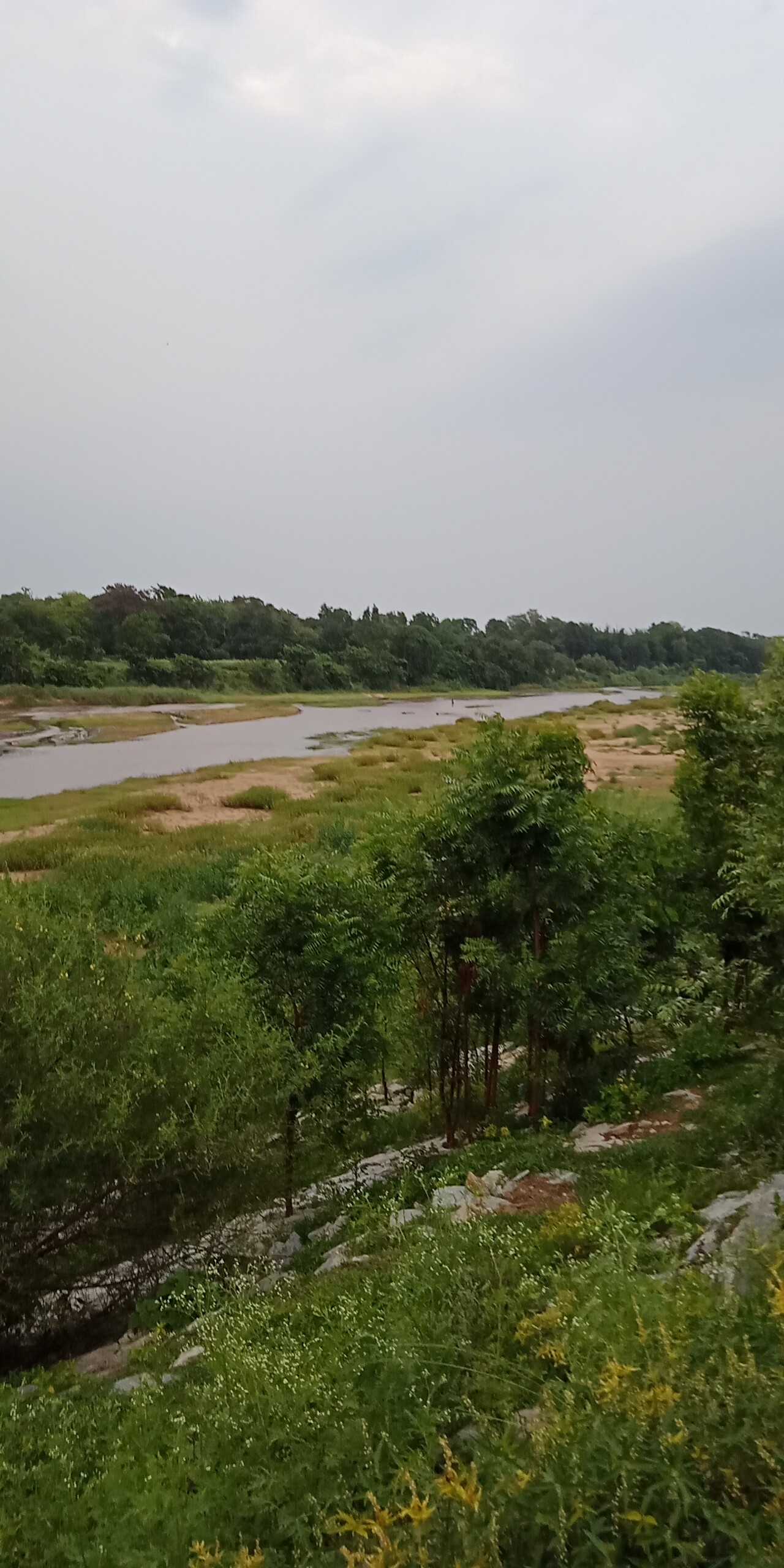
The serene Budhabalanga River, winding through Mayurbhanj—site of ancient human activity.
The Budhabalanga River, often called the “Balanga” locally, originates in the Simlipal hills and flows through Mayurbhanj before emptying into the Bay of Bengal. Spanning about 198 kilometers, it has been a vital waterway for millennia, providing water, fertile soil, and resources for early inhabitants. During the Lower Paleolithic period, the river’s banks were ideal for human settlement due to the availability of raw materials like quartzite and chert for tool-making. Geo-archaeological studies suggest that these sites were formed under humid conditions, with artifacts deposited in riverine gravels and terraces.
Recent explorations highlight how the river’s ecosystem supported hunter-gatherer communities. The surrounding forests offered food sources like wild animals and plants, while the river facilitated movement and trade. Today, the Budhabalanga remains a scenic spot, but its prehistoric legacy is what draws archaeologists and history enthusiasts.
Key Archaeological Sites Along the River
Mayurbhanj boasts over 20 Paleolithic sites, with many clustered around the Budhabalanga River and its tributaries. Excavations began in the 1930s, revealing a “finest lot of Palaeolithic” artifacts in the region. Here are some standout locations:
Ghodapal: A Newly Discovered Gem

An excavation site in Mayurbhanj, similar to those along the Budhabalanga.
Located on the banks of the Budhabalanga near the Simlipal Biosphere Reserve, Ghodapal is a Lower Paleolithic site uncovered in recent explorations. Artifacts here include handaxes and cleavers, indicative of Acheulean technology—a hallmark of Homo erectus or early Homo sapiens. The site’s proximity to the river suggests early humans used it for quarrying stones and as a campsite.
Kuliana: The Pioneering Excavation
Excavated in 1939-40 by the University of Calcutta, Kuliana is one of the most studied Paleolithic sites in Mayurbhanj. Situated near the river, it yielded tools from the Lower Paleolithic era, including choppers and scrapers. Nearby, sites like Kampta and Kuchai have also produced similar finds, pointing to a dense population during this time.
Other Notable Spots
Around Baripada, the district headquarters, several sites like Baidipur have revealed Neolithic celts alongside Paleolithic tools, showing a transition in human activity. In total, seven Lower Paleolithic sites in the area indicate a “heavy concentration of population,” with evidence spanning from the Acheulian phase. These locations, often on river terraces, highlight how the Budhabalanga shaped prehistoric migration patterns.
Tools and Artifacts: Windows into Ancient Life

Examples of Paleolithic tools, including choppers, handaxes, and scrapers found in regions like Mayurbhanj.
The artifacts from Mayurbhanj’s Paleolithic sites are primarily Acheulean tools, crafted from local stones. Common finds include:
- Handaxes and Cleavers: Bifacial tools used for cutting, chopping, and butchering animals. These symmetrical implements show advanced knapping techniques.
- Choppers and Scrapers: Rough, single-sided tools for skinning hides and processing food.
- Flakes and Cores: Byproducts of tool-making, often found in large quantities at sites like Ghodapal.
These tools, dating to the middle Pleistocene, were made under humid conditions, as evidenced by geo-archaeological analysis. They paint a picture of nomadic hunter-gatherers who relied on the river for survival, hunting large game and gathering plant resources in the dense forests.
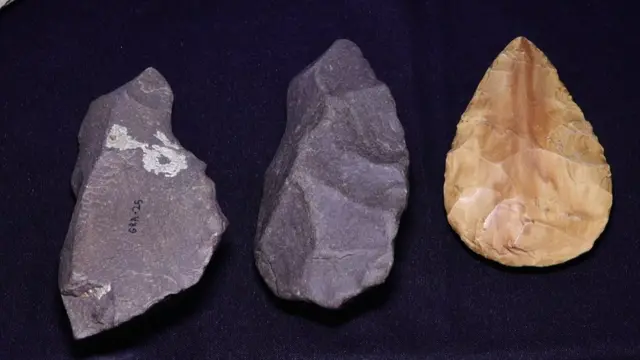
Ancient stone tools unearthed in Indian excavations, akin to Mayurbhanj discoveries.
The Significance: Early Human Adaptation and Legacy
These settlements along the Budhabalanga reveal how early humans adapted to Odisha’s tropical climate. The region’s biodiversity, including the nearby Simlipal forests, provided ample resources, fostering innovation in tool-making. This era marks a crucial step in human evolution, bridging Africa-origin migrations to South Asia.
Today, these sites underscore the need for preservation amid modern development. Visiting them offers a chance to connect with our roots—imagine standing by the river where our ancestors once crafted their first tools!
Conclusion
Mayurbhanj’s Paleolithic heritage along the Budhabalanga River is a testament to humanity’s enduring spirit. From Ghodapal’s recent finds to Kuliana’s historic excavations, these sites invite us to explore the dawn of civilization in Odisha. If you’re planning a trip, combine it with a visit to Simlipal for a full prehistoric adventure. Stay tuned for more on Mayurbhanj’s wonders!
You might be interested in